Spirit of Rejection: How It Creates the Distance You Fear

Written by: Christopher Gomez
Table of Contents
The spirit of rejection often works quietly. A person may sincerely want love, friendship, and healthy connection, yet others repeatedly feel pushed away. The words may sound reasonable, but an unspoken message seems to sit underneath them: “I reject you.”
That hidden message can create a painful cycle. People pull back because they feel unwanted. The person then experiences their distance as proof that nobody cares, which deepens isolation, unworthiness, and fear of abandonment.
This teaching is part of our Strongman Demons teaching series, drawn from themes in my upcoming book, Where Are All the Saints. The central issue is not only the pain of being rejected. It is how unresolved rejection can begin to shape identity, communication, and relationships until a person unknowingly produces the distance they fear.
Key Takeaways
The spirit of rejection can make ordinary communication feel cold, even when the speaker means well.
Past wounds may build self-protective walls that block both pain and healthy love.
Rejection often sustains itself through a cycle of fear, distance, and perceived confirmation.
Healing combines truth, forgiveness, inner healing, and deliverance with new ways of relating to others.
What Is the Spirit of Rejection?
The spirit of rejection is a demonic influence that works through wounds, lies, fear, and distorted identity. It tells a person they are unwanted, unsafe, forgotten, or difficult to love. Over time, those lies can become so familiar that they feel like facts.
Rejection itself is a human experience. Everyone will face disappointment, exclusion, criticism, or loss at some point. Feeling hurt does not automatically mean a demon is involved. A spiritual pattern becomes more concerning when rejection repeatedly controls how you interpret people, respond to love, protect yourself, and understand your worth before God.
The spirit often operates in two directions. It makes you feel rejected, and it can cause others to feel rejected by you. That second direction is easy to miss. You may focus on how lonely or misunderstood you feel without seeing the emotional distance others experience when they interact with you.
Hidden Cycle of Rejection in Relationships

The strongest hold of rejection is often not one painful event. It is a repeating relationship cycle. The person fears rejection, communicates through self-protection, and then experiences the resulting distance as another rejection.
Words May Be Neutral, but the Subtext Feels Cold
Communication carries more than vocabulary. Tone, timing, facial expression, posture, and emotional availability can affect how a message is received. A person influenced by rejection may say the right words while still communicating distance, suspicion, or disapproval.
I often describe it like a hot dog and a bun. The hot dog is the spoken message. The bun is the emotional subtext wrapped around it. The sentence may be harmless, but the subtext says, “Do not come close,” “You are a burden,” or “I do not accept you.”
The person may not intend any of those messages. Their intentions can be sincere. Yet others leave the conversation feeling small, unwelcome, or disconnected.
Self-Protection Pushes People Away
Many people respond to rejection by building a protective wall. They become guarded, highly independent, emotionally unavailable, controlling, overly careful, or quick to withdraw. The wall feels necessary because closeness seems dangerous.
A wall that blocks pain also blocks affection, correction, support, and trust. People may try to come near, but they cannot find a safe way in. Eventually, some stop trying.
Self-protection can also appear as approval seeking. A person may become overly agreeable, afraid to say no, or dependent on praise. The spirit of people pleasing may look warm on the surface, but it is still driven by fear rather than secure love.
Distance Then Feels Like Proof
When others pull back, the person often thinks, “I knew they would leave.” The outcome appears to confirm the original lie. What remains unseen is that fear and self-protection helped create the distance.
The cycle can look like this:
A past wound produces fear of being rejected again.
Fear creates guarded or approval-driven behavior.
Other people feel distance, pressure, or confusion.
Relationships become strained.
The strain is interpreted as proof of personal unworthiness.
Isolation deepens, making the next relationship even harder.
Breaking this cycle requires more than finding nicer people. The wound, the spiritual agreement, and the relational pattern all need attention.
Signs the Spirit of Rejection May Be Operating
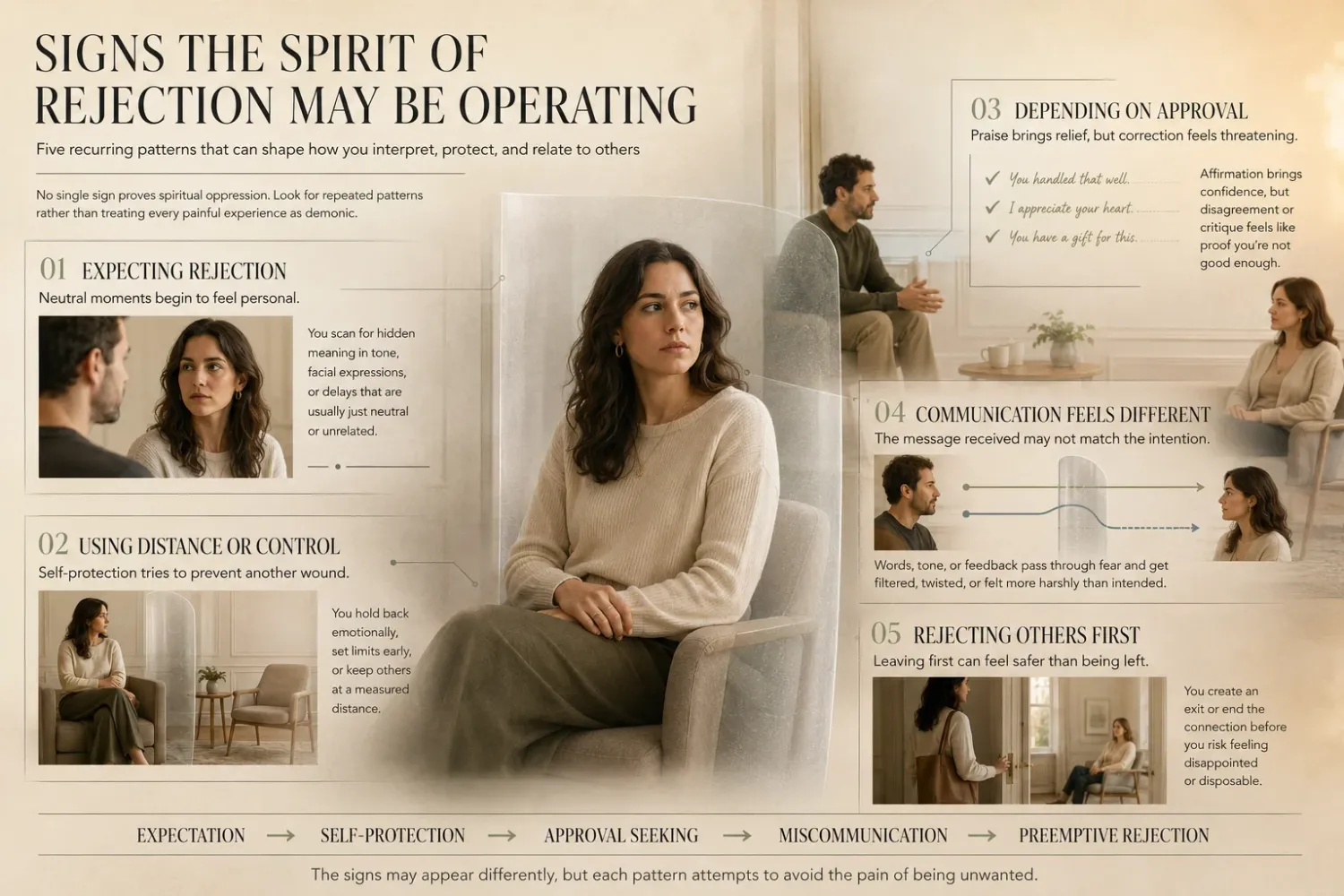
No single sign proves spiritual oppression. Look for repeated patterns that remain powerful even when circumstances change and healthy people offer love.
You Expect Rejection Before It Happens
You may enter conversations already watching for signs that someone dislikes you. A delayed reply, a distracted expression, or a change in tone can feel personal. Neutral events are quickly interpreted through the expectation of abandonment.
This expectation keeps the heart and mind in a defensive position. Instead of receiving the relationship as it is, you relate to what you fear it will become.
You Protect Yourself With Distance or Control
Some people disappear when they feel exposed. Others control conversations, decisions, schedules, or emotions because uncertainty feels unsafe. Both responses try to prevent another wound.
The behavior may appear strong, but the deeper message is often, “I must stay in control because nobody will protect me.” A person can become difficult to reach while still longing deeply to be known.
You Depend on Approval to Feel Secure
Rejection can make approval feel like oxygen. Praise brings temporary relief, but correction feels devastating. You may overwork, perform, explain yourself, or keep everyone happy because being misunderstood feels unbearable.
Fear of rejection often overlaps with the spirit of fear. Both can create false forms of safety that keep a person from honest, peaceful relationships.
Your Communication Lands Differently Than You Intended
You may repeatedly hear that you seem distant, harsh, dismissive, intimidating, or uninterested, even though you do not intend to communicate those things. Rather than immediately dismissing the feedback, ask God whether an old wound is shaping the emotional message beneath your words.
We have seen this pattern in a CEO who sincerely cared about his staff. Before deliverance, his team often left conversations feeling distant and misunderstood. After deliverance, they began describing his communication as clearer, warmer, and more inspiring. His vocabulary had not suddenly become brilliant. The hidden barrier around the message had lifted.
You Reject People Before They Can Reject You
You may end relationships quickly, avoid vulnerable conversations, test people, or assume the worst about their motives. Rejecting first creates a temporary sense of control.
The cost is that healthy connection never gets enough time to grow. The person avoids the pain of possible rejection but also loses the possibility of trust.
Where the Spirit of Rejection Takes Root

The themes behind Where Are All the Saints repeatedly return to the connection between wounds, spiritual agreements, and patterns of behavior. Rejection often gains influence where pain has remained unnamed or where a lie became a personal identity.
Abandonment, Betrayal, and Early Wounds
Common roots include abandonment, betrayal, neglect, humiliation, favoritism, bullying, broken trust, and repeated criticism. A child may not have language for these experiences, but the heart still forms conclusions.
Those conclusions may sound like:
“Nobody stays.”
“I am not worth choosing.”
“Love must be earned.”
“People will use me.”
“Something is wrong with me.”
The original wound may be old, but the conclusion continues shaping present relationships. The person is no longer responding only to what is happening now. They are also responding to what happened then.
Inner Vows Become Emotional Walls
An inner vow is a private decision formed in pain. It may sound like, “I will never need anyone again,” “I will never let anyone see me weak,” or “Nobody will ever hurt me like that again.”
The vow promises safety, but it gives fear authority over future relationships. It turns a painful event into a rule for living.
The Disarming Lies inner healing ministry helps people identify beliefs that have become deeply rooted and replace them with God’s truth. Freedom grows when the protective vow is renounced and the wounded place is surrendered to Jesus.
Lies About Worth and Identity
The deepest lie of rejection is not simply, “That person did not choose me.” It becomes, “I am not worthy of being chosen.”
That lie can distort how you see God. You may believe He tolerates you but does not delight in you. You may pray while expecting silence, repent while expecting condemnation, or serve while trying to earn a place you have already received in Christ.
Scripture answers rejection with adoption. Romans 8:15-17 describes believers as God’s children who have received the Spirit of adoption, not slavery to fear. Identity in Christ is not based on another person’s approval, attention, or ability to love you well.
How Rejection Affects Faith, Relationships, and Leadership
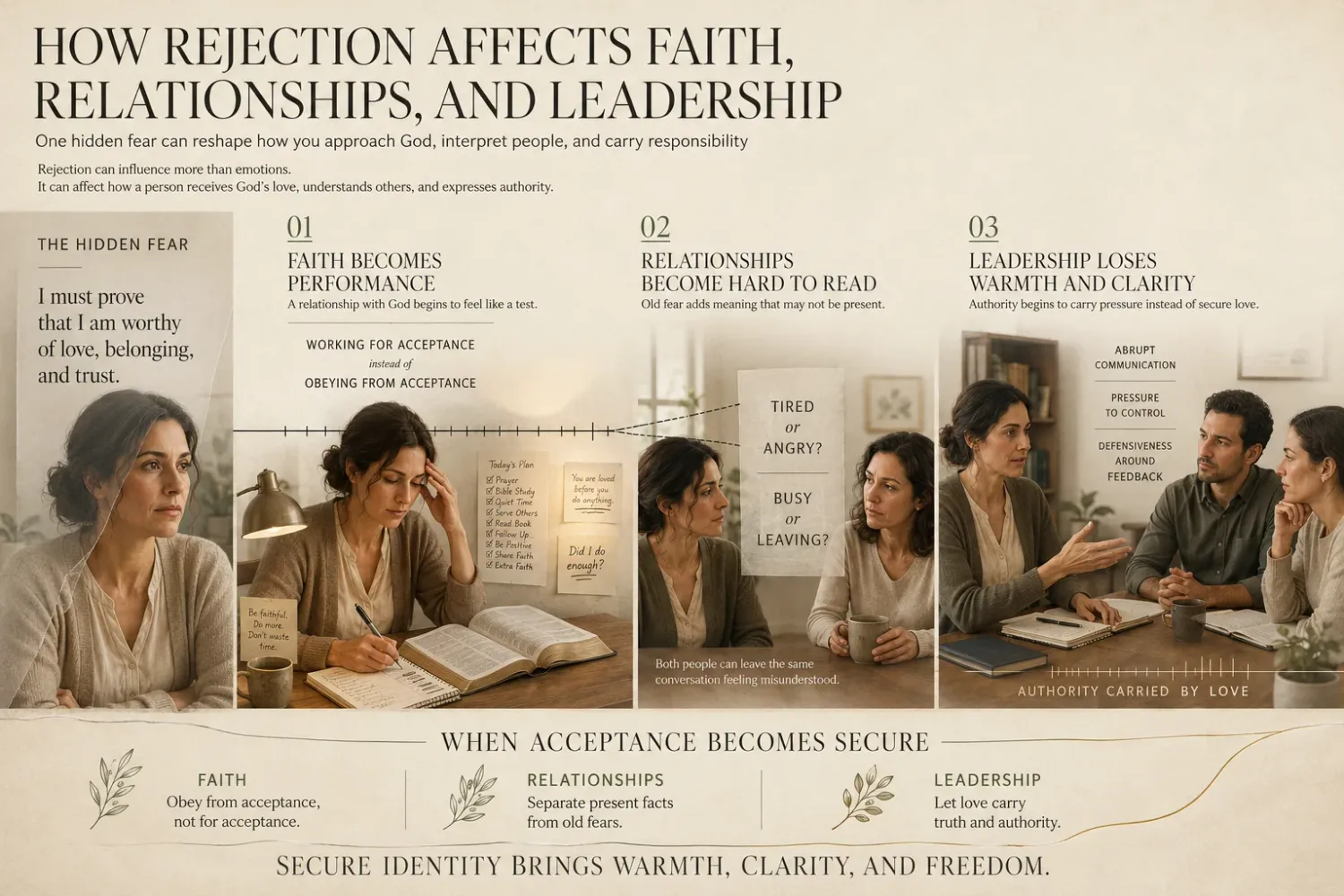
Rejection rarely stays in one area. It can affect prayer, friendships, marriage, family life, work, ministry, and the way a leader carries authority.
Faith Can Become Performance
A person who feels unwanted may try to prove their worth to God. Prayer becomes a test of whether God will respond. Service becomes a way to secure approval. A mistake feels like evidence that God has withdrawn.
The answer is not spiritual passivity. It is learning to obey from acceptance rather than working for acceptance. God’s correction is real, but His fatherhood is not unstable.
Relationships Become Hard to Read
Rejection makes it difficult to separate present facts from old fears. You may assume a loved one is angry when they are tired, or believe a friend is abandoning you when they are simply busy.
At the same time, people around you may genuinely experience your protective behavior as rejection. Both sides can feel misunderstood. Honest feedback, humility, prayer, and patient communication are needed to separate what is real from what fear has added.
A rejection-focused prayer and ministry conversation can help expose these lies. AIIIH’s teaching on disarming rejection, fear, and feeling stuck shows how truth and prayer can uncover beliefs that keep people trapped.
Leadership Can Lose Warmth and Clarity
A leader can be sincere, skilled, and passionate while still leaving people feeling unseen. Fear of vulnerability may produce abrupt communication. Fear of losing control may produce pressure. Fear of criticism may make feedback feel threatening.
When rejection loses its influence, authority can become calmer. The leader no longer needs to protect an unstable identity. Communication becomes clearer because love, not fear, is carrying the message.
Christians are called to “follow the way of love” in 1 Corinthians 14:1. Love does not remove truth or authority. It changes the spirit in which truth and authority are expressed.
How Healing and Deliverance Break the Cycle
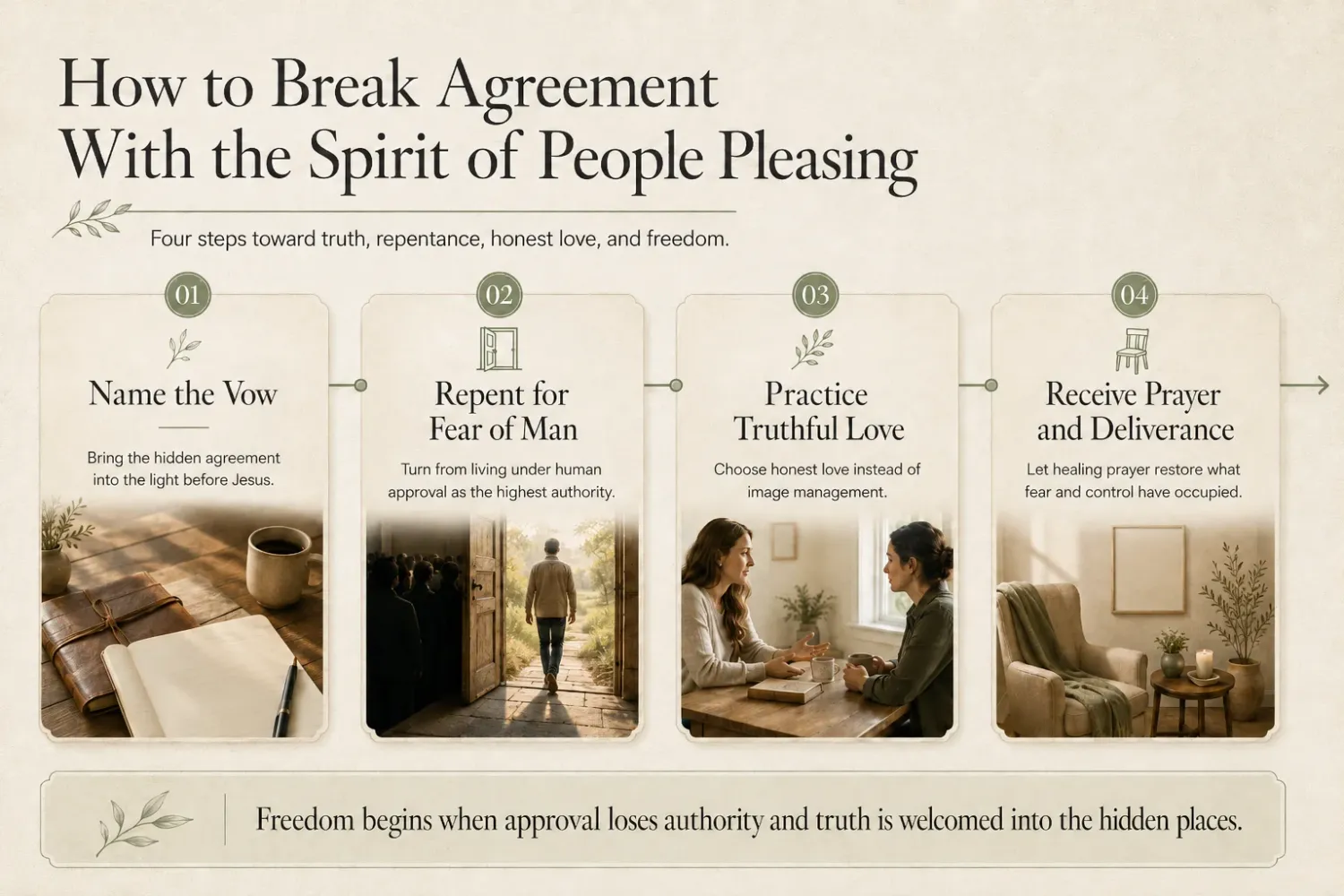
Freedom from the spirit of rejection often includes deliverance and inner healing. Deliverance addresses demonic influence. Inner healing addresses the wounds, lies, vows, and habits that gave rejection room to operate.
Bring the Original Wounds Before God
Healing begins with honesty. Name the events that taught you to expect abandonment or believe you were unworthy. You do not need to minimize what happened or pretend it no longer hurts.
Invite Jesus into the memory and ask Him to expose the lie attached to it. The goal is not to obsess over the past. It is to stop allowing the past to define the present.
Forgive Without Denying the Harm
Forgiveness releases a person from the debt you believe they owe you. It does not call evil good, remove wise boundaries, or require immediate reconciliation with someone unsafe.
Unforgiveness can keep the heart tied to the rejection. Forgiveness places judgment in God’s hands and removes a point of agreement with bitterness, revenge, and resentment.
Renounce Inner Vows and Spiritual Agreements
A vow such as “I will never trust again” may feel protective, but it resists the way God created people to live in love and community. Renounce the vow clearly and ask God to forgive you for making fear your protector.
You can also renounce agreements such as:
“I am unwanted.”
“I will always be alone.”
“Nobody can love the real me.”
“I must perform to be accepted.”
“I need to reject people before they reject me.”
Replace each agreement with specific truth about God’s love, adoption, presence, and authority.
Receive Your Identity in Christ
Rejection loses power when belonging becomes rooted in Christ. Your identity cannot depend on whether every person understands, includes, praises, or chooses you.
Receiving God’s love may take repeated prayer and patient healing, especially when rejection began early. The goal is not to force an emotion. It is to let truth become more authoritative than the old wound.
Practice Communication That Carries Love
Spiritual freedom should produce relational fruit. Ask trusted people how your communication feels, not only whether your words are technically correct. Listen without immediately defending your intentions.
Practice warmth, directness, empathy, and clear boundaries. Say what you mean without using silence, pressure, overexplaining, or withdrawal to control the outcome.
Freedom also needs ongoing discipleship. The teaching on why deliverance does not always seem to last explains why repentance, forgiveness, truth, prayer, and new habits help a person remain free after ministry.
What Restoration Can Look Like
Restoration is not the promise that nobody will reject you again. Jesus Himself experienced rejection. Freedom means rejection no longer controls your identity, decisions, or ability to love.
You may begin to notice that conversations feel lighter. You can receive correction without collapsing, set boundaries without hostility, and let people come close without testing them. Relationships that once felt confusing may gain clarity.
Some strained relationships may be restored. Others may not return, and wisdom may require distance from unsafe people. God’s restoration is larger than recovering every past connection. He restores your ability to live from love, receive healthy belonging, and move forward without being ruled by abandonment.
As fear loses its hold, confidence and purpose can grow. People often respond differently when they no longer feel an invisible wall around your communication. What was once marked by loneliness can become a testimony of God’s healing, truth, and patient love.
Break Agreement With Rejection and Choose Connection
The spirit of rejection tries to turn a wound into an identity and isolation into a way of life. Its cycle is broken when the hidden message changes from “I reject you” to “I can love you without losing myself.”
Bring the wound to Jesus. Forgive those who harmed you. Renounce vows built from fear. Receive your place as a beloved child of God, and allow trusted people to help you recognize the relational habits that still need healing.
If you are experiencing the effects of this spirit in your life, we welcome you to our one-on-one Deliverance sessions, available daily, and our monthly healing call, held on the first Tuesday of every month.
FAQs
Can the spirit of rejection operate through avoidance instead of conflict?
The spirit of rejection can operate through avoidance when distance feels safer than honest connection. A person may stop replying, withdraw emotionally, or avoid difficult conversations because closeness activates fear.
Does feeling rejected always mean a spirit is involved?
Feeling rejected does not always mean a spirit is involved. Rejection can be a normal response to a painful event, misunderstanding, or unhealthy relationship. Look for persistent spiritual and relational patterns rather than treating every hurt as demonic.
Can prayer alone break the pattern?
Prayer can break spiritual bondage, but the pattern may also require forgiveness, renewed thinking, honest relationships, and changed behavior. Deliverance should not become a reason to avoid inner healing or practical responsibility.
Why do I reject others when I am afraid of being rejected?
You may reject others because rejecting first creates a sense of control. The response protects you from immediate vulnerability, but it also prevents trust and reinforces the belief that relationships are unsafe.
Can healing take time after deliverance?
Healing can take time after deliverance because wounds, habits, and communication patterns may need to be retrained. Continued prayer, truth, forgiveness, healthy community, and wise ministry support help freedom become stable in daily life.
SUPPORT THIS MINISTRY
As a Catholic nonprofit, every dollar given is prayerfully used to build the Kingdom of God — on earth as it is in heaven. Through your generosity, we are able to continue proclaiming the Gospel, setting the captives free, and equipping the Body of Christ to walk in healing, deliverance, and true freedom. Your gift is not just a donation; it is an act of faith that multiplies into souls restored, families healed, and lives transformed by the power of Jesus Christ. We keep nothing for ourselves. All contributions go directly toward sustaining this ministry — providing the tools, technology, staff, and outreach necessary to reach more hearts with the mercy of God. Please prayerfully consider sowing into this mission. Together, we are answering Christ’s call to heal the brokenhearted, proclaim liberty to captives, and set free those who are oppressed.