
Spirit of People Pleasing: When Approval Becomes Bondage

Written by: Christopher Gomez
Table of Contents
The spirit of people pleasing is not the same as kindness, humility, or serving others in love. God calls us to honor people, care for people, and prefer others above ourselves. But there is a point where serving becomes bondage, and the need to be liked begins to control the heart.
Part of our Strongman Demons teaching series, drawn from my upcoming book, Where Are All the Saints. The Pleaser Spirit is one of the ways a person can become trapped in a life of performance, fear, and hidden control. It often looks harmless from the outside because the person may appear responsible, generous, agreeable, and put together. Underneath, there can be deep anxiety, shame, and a constant fear that someone is disappointed.
Many believers who wrestle with this pattern are not trying to rebel against God. They are trying to survive rejection. They may have learned early in life that approval felt safer than honesty, perfection felt safer than weakness, and pleasing people felt safer than being seen. But Jesus does not heal us by helping us maintain a perfect image. He brings us into truth, freedom, and real connection.
Key Takeaways
The spirit of people pleasing works through fear, not true love.
People-pleasing often grows from shame, trauma, rejection, or inner vows.
The Pleaser Spirit can hide behind perfectionism, success, service, and false peace.
Freedom begins when we stop living for approval and return to God’s truth.
What Is the Spirit of People Pleasing?
The spirit of people pleasing is a spiritual pattern that pressures a person to live for approval, acceptance, and the avoidance of disapproval. It is not simply wanting healthy relationships. It is a fear-driven need to manage how people see you, respond to you, and feel about you.
Scripture calls this the fear of man. Proverbs 29:25 says the fear of man lays a snare, but whoever trusts in the Lord is safe. A snare is not always obvious. It traps quietly. That is how people-pleasing often works. A person may think they are being loving, wise, or responsible, while fear is quietly deciding their choices.
The Pleaser Spirit uses that fear as a form of control. It convinces the person that peace depends on keeping everyone satisfied. It tells them they must avoid conflict, prevent disappointment, and maintain an image others cannot criticize. Over time, the person can become more aware of human opinion than the voice of God.
This is why people-pleasing is spiritually dangerous. It can make obedience feel risky. It can make truth feel unkind. It can make boundaries feel selfish. It can make a person say yes to people while slowly saying no to God.
How the Pleaser Spirit Uses Approval to Control a Life
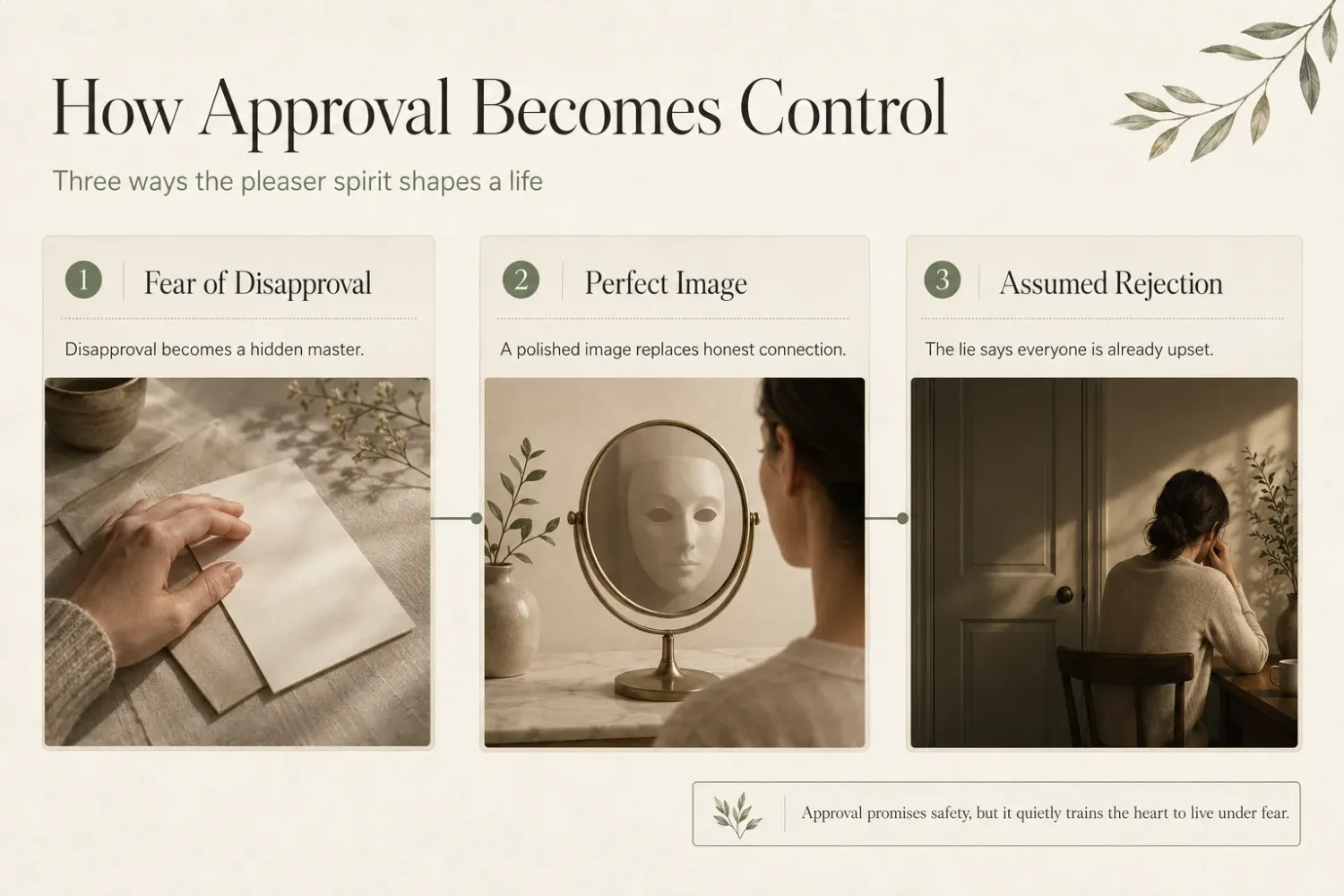
The Pleaser Spirit rarely announces itself as control. It often appears as politeness, helpfulness, excellence, or sensitivity. But the fruit exposes the root. When approval becomes the goal, fear becomes the driver.
Fear of Disapproval Becomes a Hidden Master
A person under this pattern may feel responsible for every shift in another person’s tone, mood, or facial expression. If someone is quiet, they assume they did something wrong. If someone is upset, they feel they must fix it. If someone disagrees, they may feel rejected instead of simply challenged.
The spirit behind people pleasing feeds on that anxiety. It whispers that everyone is frustrated, disappointed, or secretly angry. The person then tries harder to appease people, even when there is no real accusation. Life becomes a constant attempt to solve imaginary disapproval.
This is not discernment. It is fear. Discernment brings clarity and peace. Fear brings pressure, confusion, and over-responsibility.
A Perfect Image Replaces Honest Connection
One of the strongest marks of the Pleaser Spirit is image management. The person may build a life that looks polished from the outside. The home looks perfect. The children look well behaved. The career looks successful. The schedule looks productive. The family image looks strong.
But perfection can become a hiding place. The person may believe that if everything looks good enough, no one can pity them, criticize them, or look down on them. A painful past can produce a silent vow: “I will never be pitied again.”
That vow may feel protective, but it becomes a prison. Instead of receiving healing for shame, the person builds a life designed to outrun it.
The Lie Says Everyone Is Already Upset With You
The Pleaser Spirit often creates an inner atmosphere of accusation. The person walks through relationships believing they are already failing. They may feel the need to apologize when they did nothing wrong, explain themselves when no one asked, or overperform to prove their value.
This produces exhaustion. It also blocks real intimacy. When someone believes everyone is already disappointed, they cannot relax enough to be known. They may keep smiling, serving, spending, and performing, while their heart remains hidden.
God did not create relationships to be built on performance. He created them for truth, love, correction, forgiveness, and real communion.
Signs the Spirit of People Pleasing May Be Operating
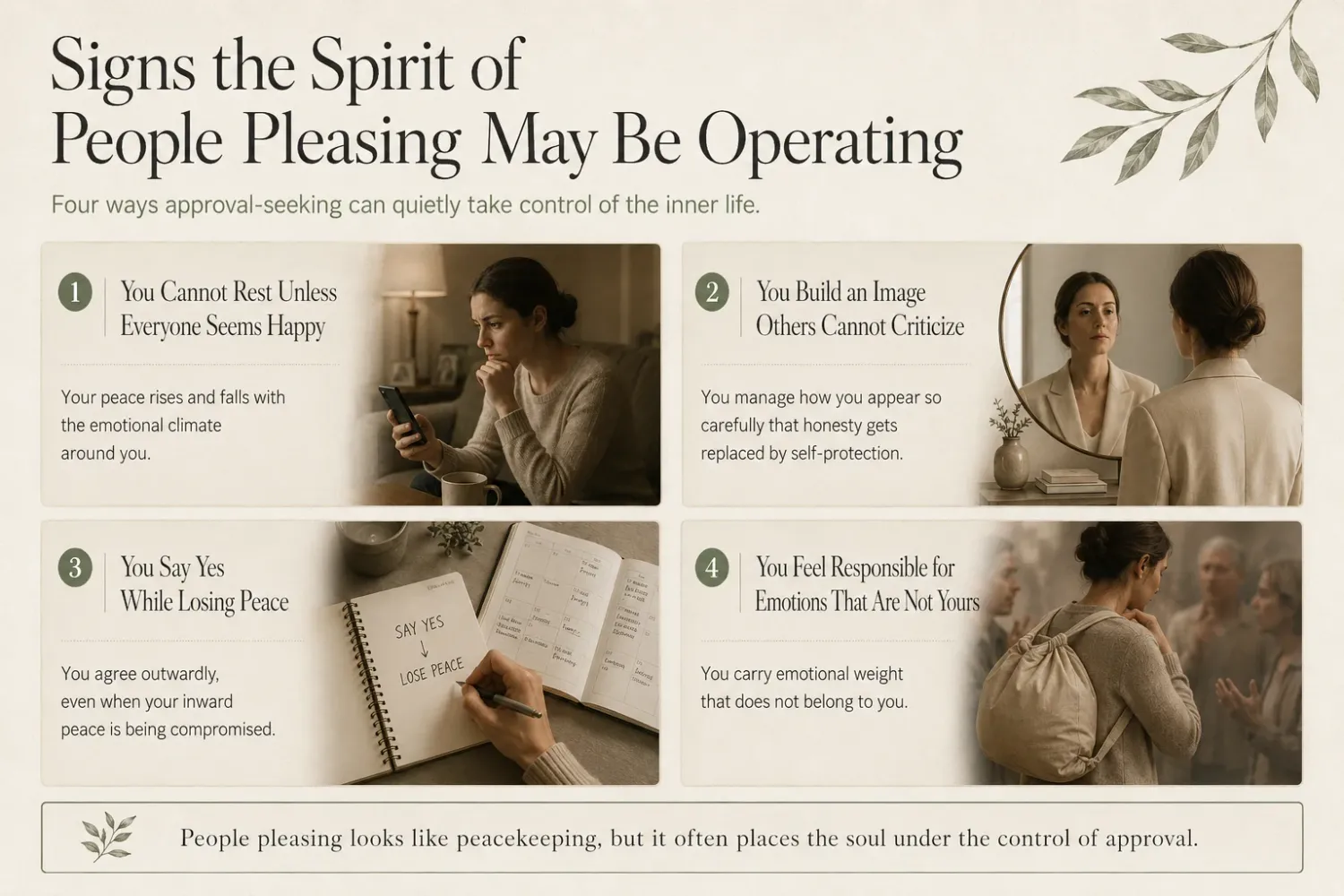
Not every act of service is people-pleasing. Love often sacrifices. Mature believers should be willing to serve when it costs them something. The question is not only what you do, but what is driving you.
The spirit of people pleasing may be operating when fear, shame, and approval control your choices more than love, truth, and obedience.
You Cannot Rest Unless Everyone Seems Happy
A common sign is the inability to rest when someone may be displeased. You may replay conversations, wonder if you said the wrong thing, or feel anxious until you receive reassurance. The need for approval becomes emotional oxygen.
When this pattern grows, peace depends on people’s reactions instead of the presence of God. That creates instability because people’s moods change. Their opinions shift. Their expectations can be unclear or unfair.
The Lord never intended your soul to be ruled by the changing responses of others.
You Build an Image Others Cannot Criticize
The Pleaser Spirit often pushes a person to present a life that cannot be questioned. It may look like excellence, but underneath there can be fear. The person may overspend, overwork, overcommit, or over-polish their life to avoid shame.
This can affect finances, family life, and emotional health. Some people spend beyond their means to maintain an image. Others exhaust themselves keeping everything impressive. They may look stable publicly while privately feeling trapped.
The goal is not stewardship anymore. The goal becomes avoiding pity, judgment, or rejection.
You Say Yes While Losing Peace
People-pleasing often appears through automatic yeses. You agree before praying. You commit before considering your capacity. You serve while becoming resentful. You avoid saying no because someone might be disappointed.
Healthy service carries grace. Fear-driven service carries pressure. When the motive is fear, even good works can become heavy.
This is where the martyr spirit can overlap with people-pleasing. A person may carry burdens God never assigned, then feel hurt when others do not notice the sacrifice.
You Feel Responsible for Emotions That Are Not Yours
A person under the Pleaser Spirit often takes ownership of other people’s emotions. If someone is angry, they must calm them. If someone is sad, they must fix them. If someone is disappointed, they must make up for it.
Compassion cares about people’s pain. Control tries to manage it. There is a difference.
Jesus loved people perfectly, but He did not obey every human demand. He disappointed people when obedience to the Father required it. He walked in compassion without becoming a slave to human expectation.
Spiritual Roots Behind People-Pleasing
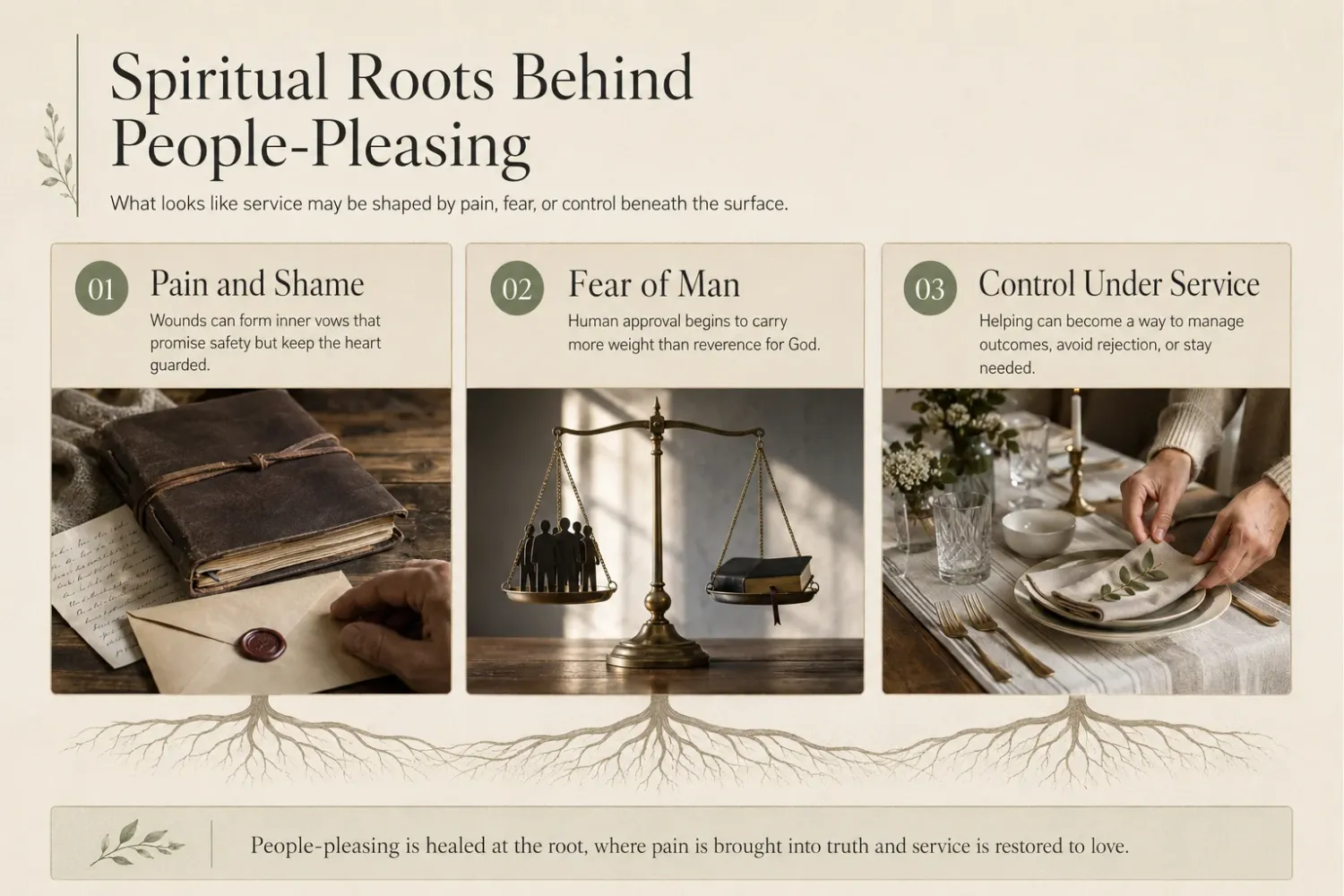
People-pleasing does not usually appear from nowhere. It often has roots. Those roots may include early rejection, abuse, emotional neglect, shame, religious pressure, family dysfunction, or repeated experiences of being punished for honesty.
A person may not remember the exact moment the pattern began, but the fruit often points to the wound.
Pain and Shame Can Form Inner Vows
One of the deepest roots is an inner vow formed through pain. After being shamed, pitied, rejected, or abused, a person may decide, “I will never be weak again,” “I will never need anyone,” or “I will never be pitied again.”
The vow may seem like strength. In reality, it gives fear a place to rule.
The person then begins to build a life that protects the vow. They perform. They please. They stay useful. They avoid weakness. They hide needs. They present a version of themselves that feels safer than honesty.
Jesus does not shame the wounded parts of us. He invites them into the light so the lie can be broken and the wound can be healed.
The Fear of Man Can Replace the Fear of God
The fear of man becomes dangerous when human approval carries more weight than God’s Word. Galatians 1:10 confronts this directly by asking whether we are seeking the approval of man or of God.
People-pleasing does not always look like obvious compromise. Sometimes it looks like silence when God calls for truth. Sometimes it looks like staying in unhealthy patterns because confrontation feels too costly. Sometimes it looks like obeying the loudest person in the room instead of the Lord.
The fear of God brings life, wisdom, and safety. The fear of man brings bondage, confusion, and spiritual double-mindedness.
Control Can Hide Under Service
The Pleaser-Based Control Spirit is especially subtle because it can use service as a way to control outcomes. The person may serve, give, agree, and perform, but the hidden goal is to prevent rejection or secure approval.
This is not love in its purest form. It is fear trying to purchase safety.
The difference matters. Love serves freely. Fear serves anxiously. Love can say yes with peace and no with honesty. Fear says yes while inwardly panicking about what will happen if it refuses.
God wants to purify service so it flows from love, not fear.
How People-Pleasing Damages Relationships and Faith
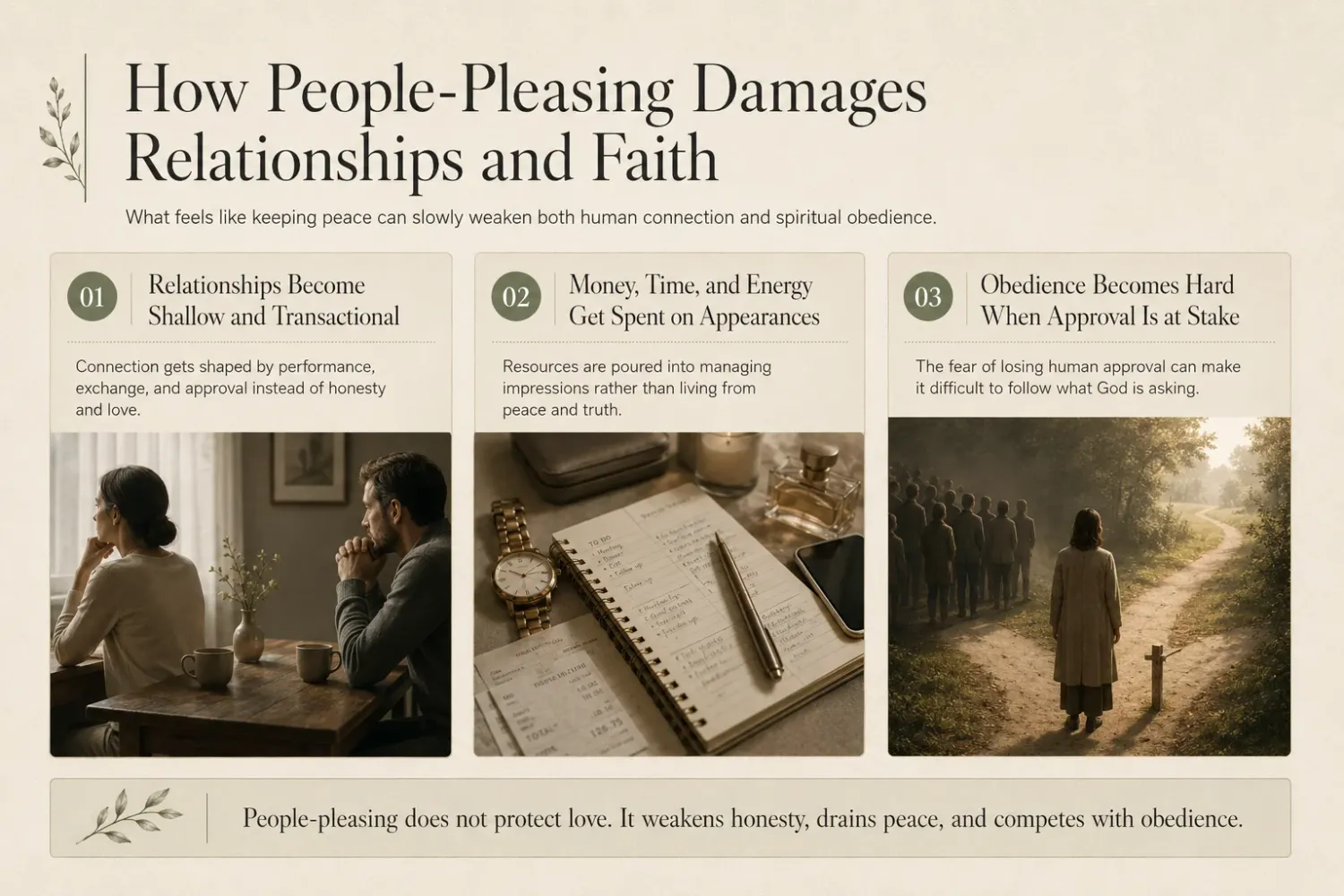
The spirit of people pleasing promises connection, but it often produces distance. It promises peace, but it often produces anxiety. It promises safety, but it often keeps the original wound untouched.
Relationships Become Shallow and Transactional
When someone is always managing an image, they cannot be fully known. They may give people the version of themselves that feels acceptable, not the truth of where they are.
This creates shallow relationships. Others may admire the person’s helpfulness, success, or pleasant nature, but they may not know the pain underneath. The person may feel surrounded by people yet deeply alone.
Real connection requires truth. It requires enough humility to be seen and enough trust to stop performing. People-pleasing blocks that because it treats authenticity as a threat.
Money, Time, and Energy Get Spent on Appearances
The Pleaser Spirit can also create practical damage. A person may spend money they do not have to keep up with others. They may say yes to commitments they cannot carry. They may pour time and energy into maintaining a public image while their private life suffers.
This can lead to hidden financial strain, emotional exhaustion, and spiritual dryness. If you feel worn down from carrying an image, the issue may not be discipline alone. There may be a deeper need for healing and deliverance from fear-driven living.
For some believers, people-pleasing also feeds mental exhaustion as a Christian, especially when faith becomes tangled with pressure, guilt, and constant performance.
Obedience Becomes Hard When Approval Is at Stake
People-pleasing can make simple obedience feel terrifying. God may ask you to tell the truth, set a boundary, repent, forgive, confront, step away, or stop performing. But the Pleaser Spirit will ask, “What will they think?”
That question can become louder than the voice of God.
The enemy does not always need to make a believer openly rebellious. Sometimes he only needs to make them afraid of disappointing people. Fear can delay obedience. It can soften conviction. It can keep a person stuck in situations God is calling them to face with truth.
Biblical Discernment: Serving People Without Becoming Their Slave
Freedom from people-pleasing does not mean becoming harsh, selfish, or indifferent. That would only replace one distortion with another. Jesus does not deliver us from people-pleasing so we can stop loving people. He delivers us so we can love them rightly.
There is a holy difference between serving people and being ruled by them. Serving flows from love. Bondage flows from fear. Serving honors God. People-pleasing often seeks to avoid rejection. Serving can include sacrifice. People-pleasing often includes self-erasure.
Jesus is the clearest example. He was moved with compassion. He healed, taught, fed, wept, corrected, and served. Yet He did not let human pressure control His assignment. He withdrew to pray. He spoke truth when people resisted it. He obeyed the Father when crowds misunderstood Him.
That is the path of freedom. We do not become less loving. We become more truthful. We stop using kindness as a shield against rejection. We learn to serve from identity instead of insecurity.
This kind of discernment is also important when dealing with patterns connected to the Jezebel spirit, control, manipulation, and fear. Not every relational struggle is demonic, but repeated patterns of fear, control, accusation, and bondage should be brought before the Lord with honesty.
How to Break Agreement With the Spirit of People Pleasing
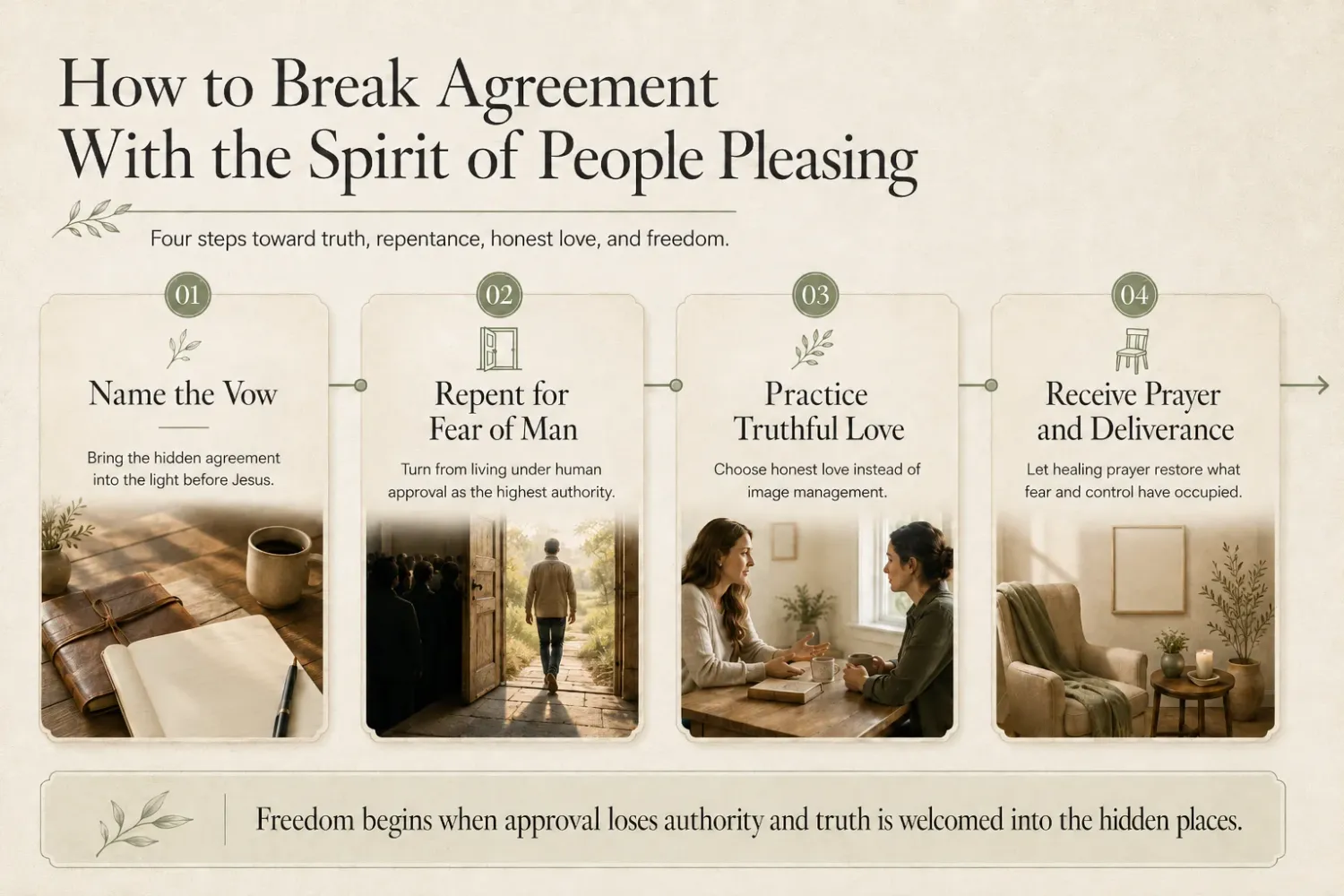
Freedom often begins when the hidden agreement is named. Many people try to fix people-pleasing only by practicing boundaries. Boundaries can help, but the deeper root may still remain. The wound, vow, fear, and spiritual agreement must be brought to Jesus.
Name the Vow and Bring It to Jesus
Ask the Lord to show you whether an inner vow is operating. It may sound like:
I will never be pitied again.
I will never let people see me weak.
I have to keep everyone happy.
I am only safe when people approve of me.
I must be perfect so no one can reject me.
Do not rush past the pain behind the vow. The vow formed because something hurt. Jesus is not asking you to pretend it did not matter. He is inviting you to stop letting that pain govern your life.
A simple prayer can begin the process: “Jesus, show me where I agreed with fear. Show me where I built my life around approval instead of Your truth.”
Repent for Living Under the Fear of Man
Repentance is not condemnation. It is a return to God. When the fear of man has become a master, repentance brings the heart back under the Lordship of Jesus.
You can repent for obeying approval more than God, for hiding behind an image, for using service to control outcomes, or for refusing truth because rejection felt too painful.
The goal is not shame. The goal is freedom. The Lord corrects because He loves. He exposes bondage so He can break it.
Practice Truthful Love Instead of Image Management
Freedom must become practical. Begin telling the truth in small places. Say no when you need to say no. Stop apologizing for things you did not do wrong. Ask for help when you are weak. Let trusted people see the real condition of your heart.
This may feel uncomfortable at first. The Pleaser Spirit has trained the soul to treat honesty as danger. But truthful love is healthier than false peace.
A person who needs support in replacing lies with God’s truth may also benefit fromDisarming Lies, especially when the people-pleasing pattern is connected to rejection, fear, or feeling stuck.
Receive Prayer, Healing, and Deliverance
Some patterns require more than self-awareness. If people-pleasing is tied to trauma, shame, fear, control, or demonic oppression, deeper prayer may be needed. Healing addresses the wound. Deliverance breaks the agreement. Discipleship helps the person walk in truth after the pressure lifts.
The spirit of fear often works closely with people-pleasing because fear is the atmosphere that keeps approval-seeking alive. When fear is confronted in the name of Jesus, the person can begin to choose obedience without panic.
Freedom grows as the heart learns a new way to live: loved by God, led by God, and no longer ruled by the need to be approved by everyone.
Freedom From the Spirit of People Pleasing
The spirit of people pleasing loses power when the person stops protecting the false image and starts bringing the real wound to Jesus. The perfect life cannot heal shame. Approval cannot heal rejection. Performance cannot produce intimacy. Only truth in the presence of God can bring real freedom.
If this pattern has been operating in your life, do not treat it as a personality flaw. Bring it into prayer. Ask the Lord to expose the fear, the vow, the wound, and the agreement. Let Him teach you how to love people without being enslaved by their approval.
If you are experiencing the effects of this spirit in your life, we welcome you to our one-on-one Deliverance sessions, available daily, and our monthly healing call, held on the first Tuesday of every month.
FAQs
Can the spirit of people pleasing look like kindness?
Yes, the spirit of people pleasing can look like kindness from the outside. The difference is the motive. True kindness flows from love and obedience to God. People-pleasing flows from fear, pressure, and the need to avoid rejection.
Can people-pleasing come from trauma?
Yes, people-pleasing can come from trauma, rejection, shame, or abuse. A person may learn to stay safe by keeping others happy. Jesus can heal the wound underneath the pattern, not just correct the outward behavior.
Is every people-pleasing pattern demonic?
No, every people-pleasing pattern should not automatically be called demonic. Some patterns are emotional, relational, learned, or rooted in immaturity. But when fear, bondage, control, inner vows, and repeated spiritual oppression are present, it is wise to seek prayerful discernment.
How do I know if I am serving from love or fear?
You may be serving from fear if you feel anxious, resentful, trapped, or terrified of disappointing someone. Serving from love may still cost you something, but it does not require you to abandon truth, peace, or obedience to God.
Can deliverance help with people-pleasing?
Deliverance can help with people-pleasing when the pattern is tied to spiritual bondage, fear, inner vows, or demonic oppression. Healing and discipleship are also important because the person must learn to live in truth after the agreement is broken.
SUPPORT THIS MINISTRY
As a Catholic nonprofit, every dollar given is prayerfully used to build the Kingdom of God — on earth as it is in heaven. Through your generosity, we are able to continue proclaiming the Gospel, setting the captives free, and equipping the Body of Christ to walk in healing, deliverance, and true freedom. Your gift is not just a donation; it is an act of faith that multiplies into souls restored, families healed, and lives transformed by the power of Jesus Christ. We keep nothing for ourselves. All contributions go directly toward sustaining this ministry — providing the tools, technology, staff, and outreach necessary to reach more hearts with the mercy of God. Please prayerfully consider sowing into this mission. Together, we are answering Christ’s call to heal the brokenhearted, proclaim liberty to captives, and set free those who are oppressed.