
What Is Spiritual Warfare? A Guide for Catholics and Christians

Written by: Christopher Gomez
Table of Contents
Spiritual warfare is the Christian struggle against temptation, sin, lies, spiritual evil, and anything that tries to pull us away from God. It is real, but it should not become a source of panic or fascination. Jesus Christ, not the enemy, is the center of the Christian life.
Most spiritual warfare is quieter than films, dramatic stories, or social media posts suggest. It often happens when you choose truth over a lie, forgiveness over resentment, prayer over distraction, or obedience over temptation. Christians do not fight for Christ’s victory as though the outcome were uncertain. We stand in the victory He has already won through His death and resurrection.
Key Takeaways
Spiritual warfare is mainly about remaining faithful to Jesus amid temptation, lies, sin, and spiritual opposition.
The enemy is not equal to God, and Christ has already won the decisive victory.
God’s armor is a life of truth, righteousness, faith, salvation, Scripture, peace, and prayer.
Not every hardship, thought, illness, or conflict is a spiritual attack, so prayer must be joined with wisdom and discernment.
What Is Spiritual Warfare?
A simple spiritual battle explained in biblical terms begins with three realities. God is holy and good. Human beings live in a fallen world and still struggle with sinful desires. Scripture also teaches that the devil and other spiritual powers oppose God’s purposes.
These realities can overlap, which is why discernment matters. A temptation may appeal to an existing weakness. A lie may gain power because it agrees with an old wound. A conflict may involve poor communication, pride, exhaustion, and spiritual pressure at the same time. Christians should neither deny spiritual evil nor blame it for every problem.
Spiritual warfare is also not a battle against people. Paul says our struggle is not against “flesh and blood.” Other people may hurt us, oppose us, or act unjustly, but they are never the spiritual enemy we are called to hate or destroy. Our response must remain shaped by truth, prayer, justice, forgiveness, and love.
The enemy is also not God’s equal. Satan is a created being with limited power. The cross and resurrection reveal Christ’s authority and victory. Colossians 2:15 describes Christ triumphing over hostile powers through the cross. We therefore approach spiritual warfare from trust in Jesus, not fear of the devil.
Where Does the Bible Describe Spiritual Warfare?
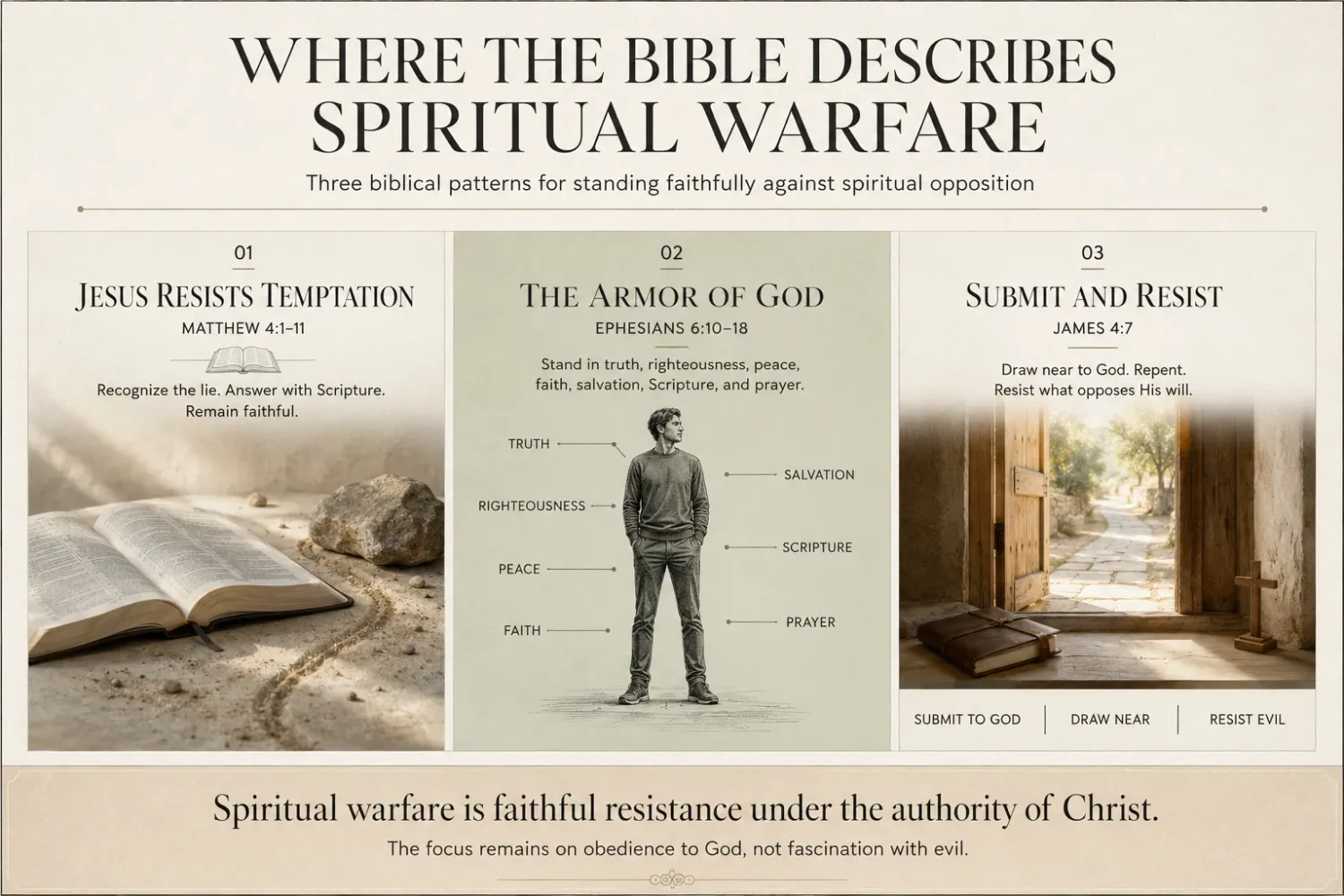
The Bible does not give one single manual called “spiritual warfare.” Instead, it shows how believers resist evil through faithfulness to God. Three passages provide a clear starting point.
Jesus Resists Temptation
In Matthew 4:1–11, the devil tempts Jesus in the wilderness. Each temptation invites Him to distrust the Father, misuse His authority, or seek glory through disobedience. Jesus answers with Scripture and remains faithful to His mission.
Jesus does not panic, argue endlessly, or become fascinated with the tempter. He knows the Father’s will and refuses every shortcut away from it. His example teaches us to recognize temptation, answer lies with God’s truth, and obey even when disobedience seems easier.
Quoting a verse is not a magic formula. Scripture strengthens us when we understand it, believe it, and allow it to shape our choices. The goal is not simply to say the correct words. The goal is to remain faithful to God.
The Armor of God
Ephesians 6:10–18 is the main biblical framework for Christian spiritual warfare. Paul tells believers to draw strength from the Lord, put on God’s armor, stand firm, and pray with perseverance. He names truth, righteousness, readiness for the Gospel of peace, faith, salvation, the Word of God, and prayer. The passage also makes clear that the struggle is not against human beings. Read the full armor of God passage.
“Put on the armor of God so that you may be able to stand firm against the tactics of the devil.” - Ephesians 6:11
The armor is not a collection of spiritual objects or secret techniques. It describes a life formed by Christ. Truth steadies the mind. Righteousness guards our conduct. The Gospel of peace shapes how we walk. Faith holds onto God when accusations and fear arise. Salvation grounds our identity. Scripture helps us recognize deception. Prayer keeps us dependent on the Holy Spirit.
Paul repeats the command to stand. Spiritual warfare is often the steady refusal to abandon what God has said, even when your feelings, circumstances, or temptations pull in another direction.
Submit and Resist
James gives one of the clearest summaries of how to engage in spiritual warfare:
“So submit yourselves to God. Resist the devil, and he will flee from you.” - James 4:7
Submission comes before resistance. We do not overcome spiritual opposition through confidence in our own strength. We draw near to God, repent of sin, humble ourselves, and then resist whatever contradicts His will.
Resistance may look like ending a sinful habit, refusing to repeat gossip, leaving an unhealthy situation, asking for forgiveness, or continuing to pray when you feel distracted. The focus stays on obedience to God rather than constant attention to the enemy.
What Does Spiritual Warfare Look Like in Daily Life?
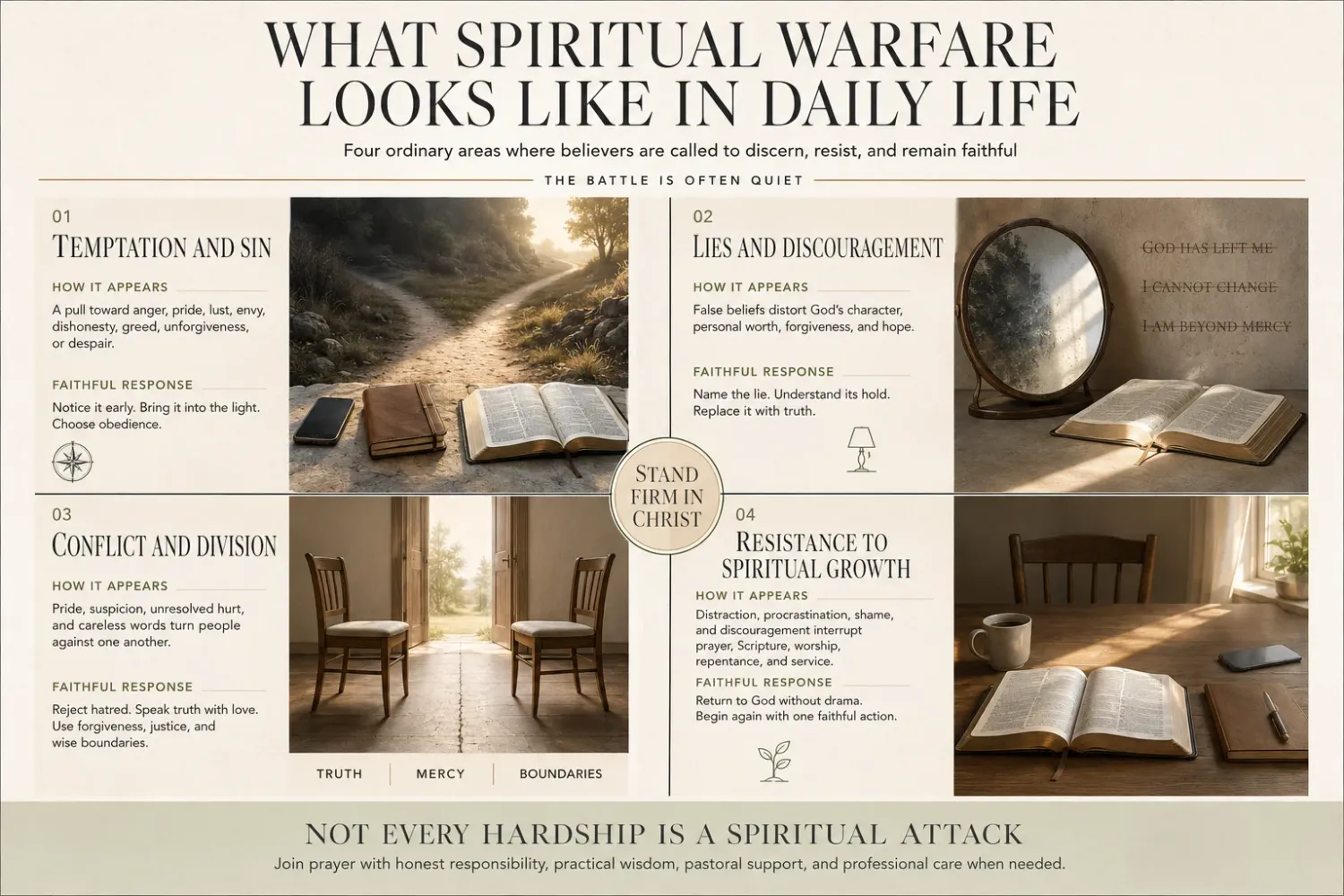
For most Christians, spiritual warfare appears in ordinary decisions. It is often less dramatic than expected, but it can still have serious effects.
Temptation and Sin
Temptation invites us to choose something other than God’s will. It may involve anger, pride, lust, envy, dishonesty, greed, unforgiveness, or despair. Temptation itself is not the same as sin. Jesus was tempted but did not sin.
The practical response is to notice the temptation early, bring it into the light, and choose a faithful action. Avoid situations that repeatedly weaken your judgment. Confess sin without making excuses. Receive God’s mercy and take concrete steps toward change.
Lies and Discouragement
Spiritual opposition often works through false beliefs such as “God has abandoned me,” “I can never change,” “My sin is too great to forgive,” or “I am only valuable when other people approve of me.” These lies can connect with trauma, rejection, shame, or repeated criticism.
Renewing the mind involves more than repeating positive phrases. It means identifying the lie, understanding why it feels believable, and replacing it with truth rooted in Christ. AIIIH’s Disarming Lies inner healing experience helps believers examine self-limiting beliefs and bring them under God’s truth.
Some discouragement also has practical or medical causes. Lack of sleep, grief, isolation, depression, anxiety, trauma, and physical illness can affect thoughts and emotions. Wise spiritual care does not ignore those realities.
Conflict and Division
Ephesians 6 warns that our struggle is not against people. That matters when relationships become tense. The enemy may exploit pride, suspicion, unresolved hurt, or careless words, but blaming every disagreement on a demon prevents honest responsibility.
Spiritual warfare in conflict means refusing hatred and dehumanization. Listen carefully. Tell the truth without cruelty. Set boundaries where needed. Forgive without pretending that harm did not occur. Seek reconciliation when it is safe and possible.
Forgiveness does not always restore trust immediately. Trust may need to be rebuilt through repentance, accountability, and changed behavior. Standing firm in Christ includes both mercy and wisdom.
Resistance to Spiritual Growth
You may notice unusual resistance when trying to pray, read Scripture, attend Mass or church, confess sin, serve others, or break a destructive pattern. Distraction, procrastination, shame, and discouragement can all pull you away from spiritual growth.
Not every difficult prayer time is a spiritual attack. Sometimes you are tired, stressed, or building a new habit. The answer is still similar: return to God without drama. A faithful ten minutes of prayer can matter more than waiting for a perfect emotional experience.
Fasting can also support prayer and repentance when practiced with wisdom. It should be biblical, simple, and safe, not driven by panic, pressure, or an attempt to force God’s hand. AIIIH’s teaching on fasting for deliverance without fear or pressure explains this balance.
How to Engage in Spiritual Warfare
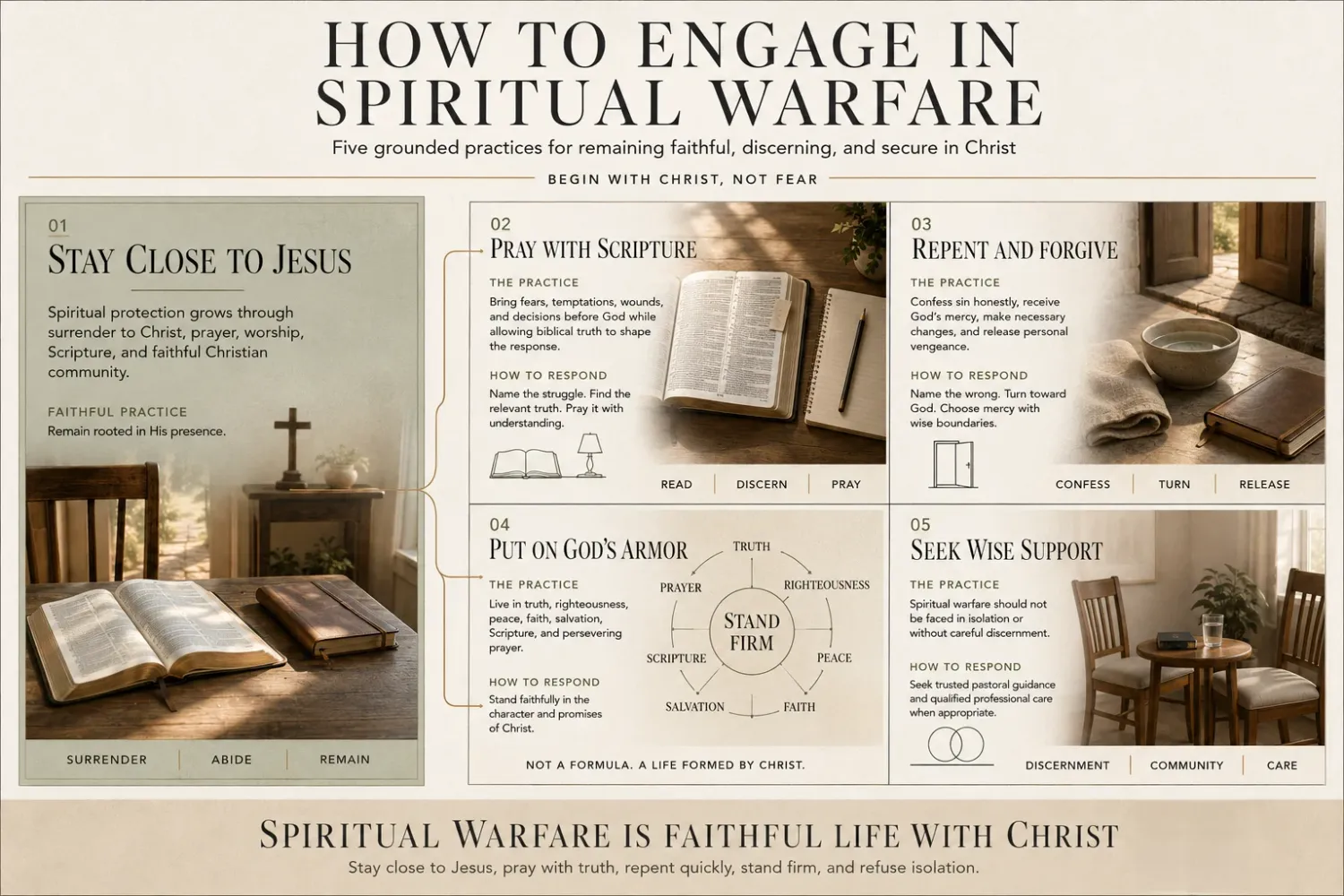
Protecting yourself spiritually does not require secret rituals. Christian spiritual protection grows through an active relationship with Jesus, a life of repentance, Scripture, prayer, community, and wise support.
Stay Close to Jesus
The safest place for a believer is not a life controlled by fear. It is a life surrendered to Christ. Spend regular time in prayer. Worship God. Read Scripture. Remain connected to a faithful Christian community.
Catholics can also draw close to Christ through the Eucharist, Confession, the other sacraments, spiritual direction, and sound devotional practices. Sacramentals such as blessings, holy water, medals, and the sign of the cross should lead the heart toward God. They are not superstitious objects or substitutes for faith and obedience.
Pray With Scripture
Prayer keeps spiritual warfare centered on God. Bring your fears, temptations, wounds, and questions to Him directly. Ask the Holy Spirit to reveal lies, strengthen faith, and guide your decisions.
Choose Scripture that addresses the actual struggle. When facing shame, remember the mercy of Christ. When tempted to retaliate, pray for grace to forgive and act justly. When afraid, meditate on God’s character rather than trying to predict every possible attack.
Prayer for other people should remain humble. Ask God to protect, guide, heal, and deliver them. Do not use prayer to control another person or make confident spiritual diagnoses about their life.
Repent and Forgive
Repentance closes the distance created by sin. Name what you did without blaming others. Ask God for forgiveness, make amends where appropriate, and change the patterns that support the sin.
Forgiveness also matters because resentment keeps wounds active. Forgiving someone does not call evil good, remove wise boundaries, or cancel justice. It releases personal vengeance to God and allows healing to begin.
Lasting freedom usually involves more than one intense prayer. It often includes healing, discipleship, truth, repentance, forgiveness, and changed habits. AIIIH explains these foundations in why deliverance may not last and how to stay free.
Put On God’s Armor
Putting on the armor of God can become a simple daily practice:
Choose truth over assumptions and deception.
Practice righteousness through honest and obedient choices.
Carry the Gospel of peace into tense situations.
Hold faith when fear and accusation rise.
Remember that your identity rests in Christ’s salvation.
Use Scripture with understanding and humility.
Pray for yourself and other believers with perseverance.
These are not seven separate formulas that guarantee a trouble-free day. Together they describe a mature Christian life that is prepared to stand.
Seek Wise Support
Spiritual warfare is not meant to be faced in isolation. Speak with a trusted pastor, priest, mature Christian, spiritual director, or trained ministry leader. Good support should help you become calmer, more truthful, more responsible, and more focused on Jesus.
Catholic teaching distinguishes private prayers of supplication from solemn exorcism. The Church reserves a major exorcism for a priest authorized by the bishop and stresses careful discernment between possible spiritual affliction and illness. Lay believers should normally pray to God for protection and freedom rather than attempt advanced commands or perform an exorcism. The Catechism’s teaching on exorcism and sacramentals also states that psychological illness belongs to the care of medical science.
Stand Firm in Christ During Spiritual Warfare
Spiritual warfare should lead you closer to Jesus, not deeper into fear. The enemy is not the main character in your life. Christ is Lord, and His grace is greater than the opposition you face.
Stay faithful in ordinary things. Pray when you feel distracted. Tell the truth when a lie feels easier. Forgive while maintaining wise boundaries. Repent quickly. Keep receiving support. When you fail, return to Christ instead of surrendering to shame.
Do not assume every intrusive thought, illness, emotional struggle, or repeated hardship is demonic. Persistent or severe symptoms deserve proper medical or mental health care alongside prayer and pastoral support. The National Institute of Mental Health recommends professional help when distressing symptoms are severe or continue for two weeks or more. Seeking qualified mental health support is not a failure of faith.
If you are experiencing persistent spiritual oppression, seek trusted pastoral guidance and avoid handling it alone. We welcome you to our one-on-one Deliverance sessions, available daily, and our monthly healing call, held on the first Tuesday of every month.
FAQs
Can Christians experience spiritual attacks?
Christians can experience spiritual attacks through temptation, accusation, deception, and resistance to faithful living. However, believers belong to Christ and are called to respond through prayer, truth, repentance, community, and trust in His authority.
Is every negative thought a spiritual attack?
Not every negative thought is a spiritual attack. Thoughts may arise from stress, habits, trauma, anxiety, depression, physical illness, or ordinary temptation. Test the thought against Scripture, consider practical causes, and seek pastoral or professional help when needed.
Can I pray spiritual warfare prayers for someone else?
You can pray spiritual warfare prayers for someone else by asking God to protect, guide, heal, strengthen, and deliver them. Keep the prayer humble and avoid declaring a spiritual diagnosis or trying to control the person through prayer.
Are lay Christians allowed to command demons?
Lay Christians should normally use petition prayers addressed to God and follow the guidance of their church or ministry leaders. In Catholic practice, solemn exorcism and its direct commands are reserved for a priest who has received the bishop’s authorization.
Can prayer replace medical or mental health care?
Prayer cannot replace medical or mental health care when professional treatment is needed. Christians can pray, receive pastoral support, and seek qualified care at the same time. These forms of help can work together rather than compete.
SUPPORT THIS MINISTRY
As a Catholic nonprofit, every dollar given is prayerfully used to build the Kingdom of God — on earth as it is in heaven. Through your generosity, we are able to continue proclaiming the Gospel, setting the captives free, and equipping the Body of Christ to walk in healing, deliverance, and true freedom. Your gift is not just a donation; it is an act of faith that multiplies into souls restored, families healed, and lives transformed by the power of Jesus Christ. We keep nothing for ourselves. All contributions go directly toward sustaining this ministry — providing the tools, technology, staff, and outreach necessary to reach more hearts with the mercy of God. Please prayerfully consider sowing into this mission. Together, we are answering Christ’s call to heal the brokenhearted, proclaim liberty to captives, and set free those who are oppressed.