
Fasting for Deliverance: Biblical Prep, Not Pressure

Written by: Christopher Gomez
Table of Contents
Fasting for deliverance is not a spiritual formula. It is not a way to force God to move, prove your seriousness, or make demons leave by your own effort. Deliverance belongs to Jesus Christ. Freedom comes through His authority, His truth, repentance, prayer, and the power of the Holy Spirit.
Still, fasting can be a biblical way to prepare your heart. When you fast with prayer, you step away from normal comforts so you can seek God with clearer focus. You make room for confession, Scripture, worship, listening, and surrender. For a believer who feels spiritually oppressed, fasting can help quiet the noise and bring the heart into deeper dependence on God.
The safest way to think about fasting and prayer for deliverance is this: fasting prepares you to seek Jesus. It does not replace Jesus.
Key Takeaways
Fasting can help you seek God with humility, focus, and repentance.
Fasting itself does not cast out demons. Jesus has authority over darkness.
Short, simple fasts are often wiser than extreme or pressured fasting.
Deliverance should be pursued with prayer, Scripture, discernment, and support.
What Fasting for Deliverance Means
Fasting for deliverance means setting aside food, a meal, or another normal comfort for a spiritual purpose connected to freedom in Christ. That purpose may include repentance, confession, prayer, renouncing sin, breaking agreement with lies, or preparing for a deliverance session.
Biblical fasting is not just not eating. It is not dieting with religious language. It is a physical act of humility before God. You are saying, “Lord, I need You more than I need my normal routine. I want Your truth more than my own coping patterns. I want freedom in Christ more than comfort.”
Jesus assumed His followers would fast, but He warned against performative fasting.
“Moreover when ye fast, be not, as the hypocrites, of a sad countenance.” - Matthew 6:16
The issue was not fasting itself. The issue was the heart. Fasting becomes spiritually healthy when it leads you toward God, not toward pride, fear, comparison, or pressure.
For deliverance, fasting may help you slow down enough to notice what needs to be brought into the light. Some people discover bitterness they have buried. Others recognize fear, occult involvement, unforgiveness, sexual sin, false beliefs, or patterns of shame. Fasting does not create freedom by itself, but it can help you respond to the Holy Spirit with honesty.
Does Fasting Cast Out Demons?
Fasting does not cast out demons by itself. Jesus casts out demons by His authority. The name of Jesus, the truth of the gospel, repentance, prayer, and Spirit-led ministry matter far more than the number of hours you have gone without food.
This matters because many believers who search for deliverance fasting are already tired. Some feel afraid. Some feel ashamed. Some wonder if they are still oppressed because they did not fast hard enough. That pressure is not from the heart of the Father.
Mark 9 is often brought into this question. In that passage, the disciples could not cast out a spirit, and Jesus later told them that “this kind” comes out only by prayer. Many modern Bible translations also include a note that some manuscripts add “and fasting” to Mark 9:29. That is why some Christians quote the verse as “prayer and fasting,” while others quote it as “prayer.”
The main point should not be turned into a rigid formula. Jesus was not teaching that demons obey hunger. He was teaching dependence on God. The disciples needed more than technique. They needed prayer, faith, humility, and reliance on the Father.
Fasting can strengthen that kind of dependence. It can help expose self-reliance. It can help you pray with greater focus. But fasting is preparation, not power in itself.
When Fasting May Help Before Deliverance
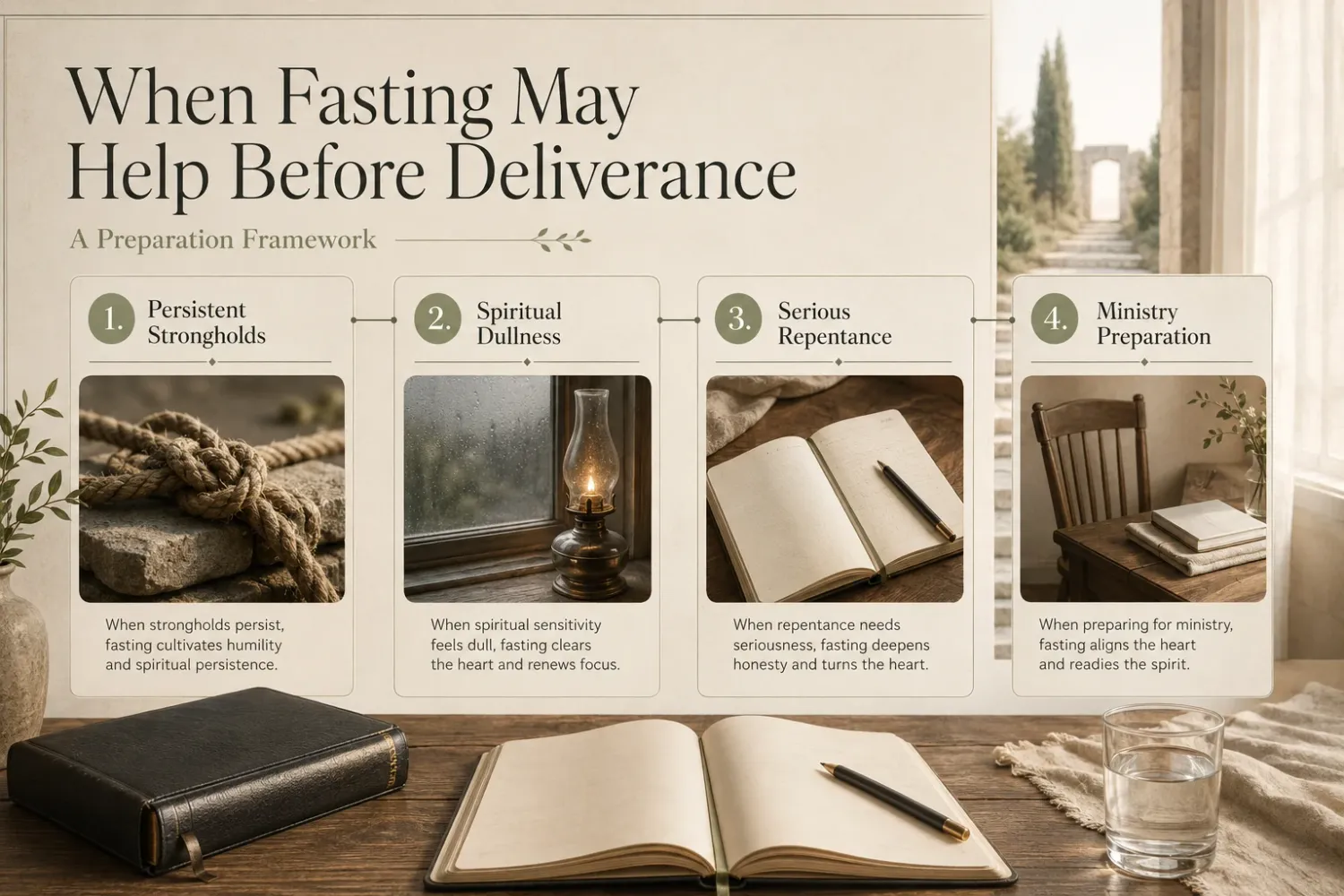
Fasting may be helpful before deliverance when your heart needs space to become quiet, honest, and surrendered before God. Not every struggle needs a fast. Not every repeated pattern is demonic. Wisdom matters.
Still, there are moments when fasting can support deliverance preparation in a healthy way.
Persistent Strongholds
A stronghold is a pattern of thought, desire, sin, fear, or bondage that feels deeply rooted. It may involve repeated agreement with a lie, a habit you cannot seem to break, or an area where you keep returning to the same destructive cycle.
Fasting can help because it interrupts the normal pattern. As you deny yourself for a short time, you can bring the stronghold before God with honesty. You may pray, “Lord, show me where I have agreed with this. Show me what needs repentance. Show me what I have believed that is not true.”
For related support after deliverance, AIIIH has a teaching on why deliverance does not always last and how believers can walk in freedom after prayer.
Spiritual Dullness
Sometimes a believer feels spiritually dull, distracted, or numb. Prayer feels scattered. Scripture feels hard to receive. Worship feels distant. That does not automatically mean a demon is present, but it can mean the soul is overloaded.
A simple fast can help reduce noise. It creates space to seek God without the same level of distraction. You may use the time you would normally spend eating to read Scripture, sit quietly before the Lord, confess sin, or worship.
The goal is not to punish your body. The goal is to turn your attention back to God.
Serious Repentance
Fasting often appears in Scripture during times of repentance, humility, and returning to the Lord. When someone is preparing for deliverance, repentance matters because freedom is not just about removing oppression. It is also about closing doors that gave darkness room to operate.
Repentance may include confessing sin, forgiving someone, renouncing occult practices, turning from sexual sin, ending destructive relationships, rejecting pride, or letting go of bitterness. Fasting can help you take repentance seriously without becoming harsh toward yourself.
The Holy Spirit convicts in order to restore. Shame accuses in order to trap. Learn the difference.
Ministry Preparation
Some people fast before receiving prayer because they want to come prepared. Others fast before ministering to someone else because they want to be humble, clean, and dependent on God.
That can be wise, as long as fasting does not become pressure. A person does not need to earn deliverance before receiving help. If you are weak, exhausted, ill, pregnant, under medical care, or recovering from disordered eating, a food fast may not be wise. God is not limited by your ability to skip meals.
Support matters too. AIIIH offers one-on-one Deliverance sessions for people who need prayer, discernment, and care as they seek freedom in Christ.
How Long Should You Fast for Deliverance?
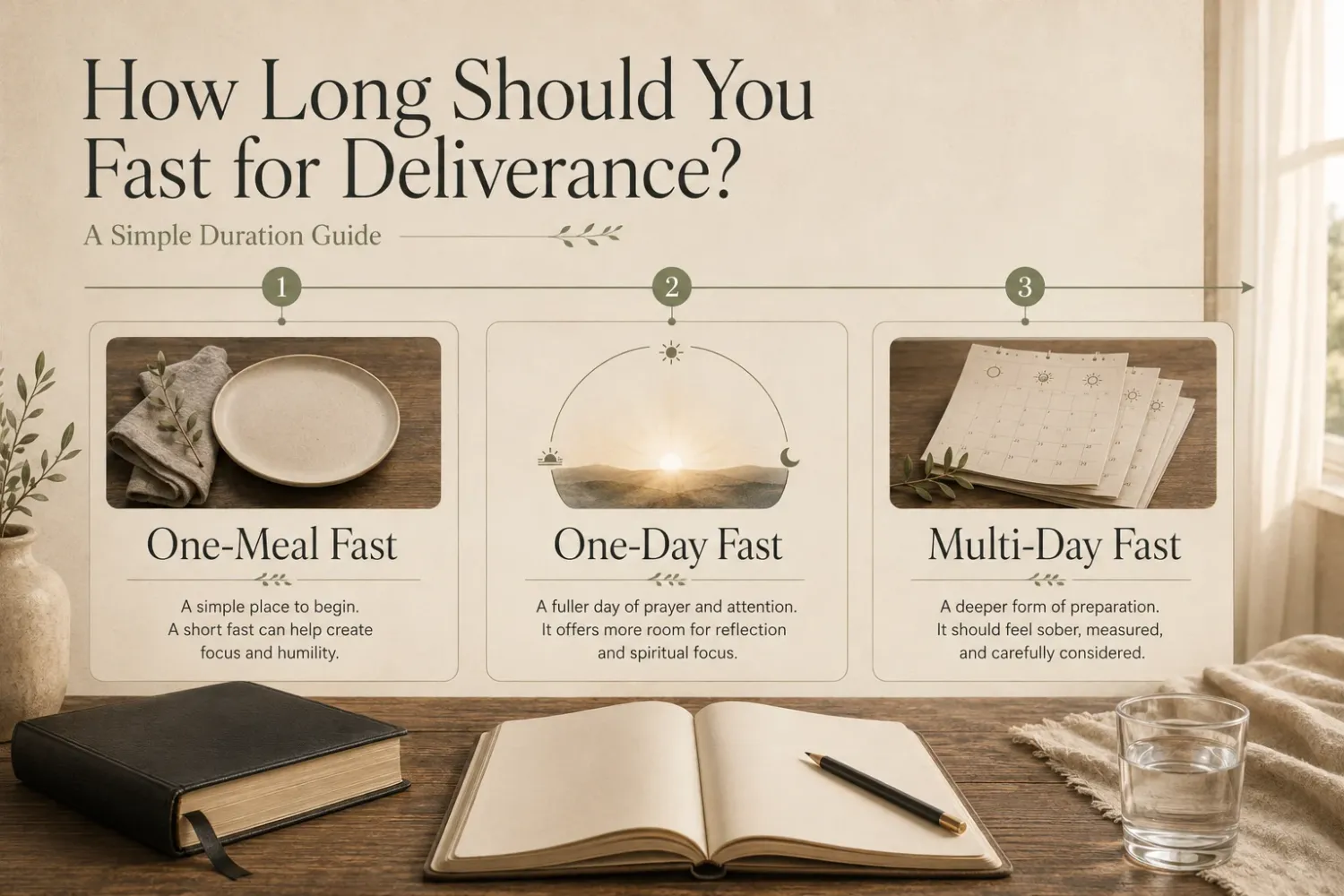
There is no required number of hours or days for deliverance fasting. Scripture gives examples of different kinds of fasting, but it does not give a universal deliverance formula.
For many believers, a simple fast is better than an extreme one. Longer is not always more spiritual. A prideful long fast can be less fruitful than a humble one-meal fast. The question is not, “How much can I endure?” The better question is, “What will help me seek God with a sincere heart?”
If you have health issues, take medication, are pregnant, have diabetes, have a history of eating disorders, or have any concern about fasting safely, speak with a healthcare professional before fasting from food. Basic safety matters. Cleveland Clinic gives helpful reminders on fasting safely, hydration, and medication concerns.
One-Meal Fast
A one-meal fast is often a wise place to start. You may skip breakfast, lunch, or dinner and use that time for prayer. This is simple, practical, and less likely to become overwhelming.
During that time, you can read a passage of Scripture, confess any known sin, renounce a specific lie, and ask the Lord to prepare your heart for freedom. This kind of fast is especially helpful for beginners or for people who are anxious about fasting.
A one-meal fast can still be spiritually meaningful. God is not impressed by the length of the fast. He looks at the heart.
One-Day Fast
A one-day fast may involve abstaining from food for a day while drinking water. For some people, it may mean a partial fast with simple foods. The point is not to prove endurance. The point is to create a focused day of prayer.
A one-day deliverance fast may include several prayer times: morning confession, midday Scripture, evening renunciation, and worship before ending the fast. Keep it simple enough that you can actually follow it.
If you become dizzy, ill, unusually weak, or unsafe, stop the fast and care for your body. Ending a fast early is not spiritual failure.
Multi-Day Fast
A multi-day fast should be approached with wisdom. It is not necessary for most deliverance preparation. Some mature believers may choose a longer fast, but it should not be done out of panic, pressure, or desperation.
Longer fasts require physical preparation, hydration, careful refeeding, and in some cases medical guidance. They are not a shortcut to freedom. A person can fast for several days and still avoid repentance. Another person can skip one meal with a humble heart and meet deeply with God.
Do not turn three days, seven days, or twenty-one days into a deliverance rule. God does not need your body to be weakened before He can be strong.
How to Fast and Pray for Deliverance
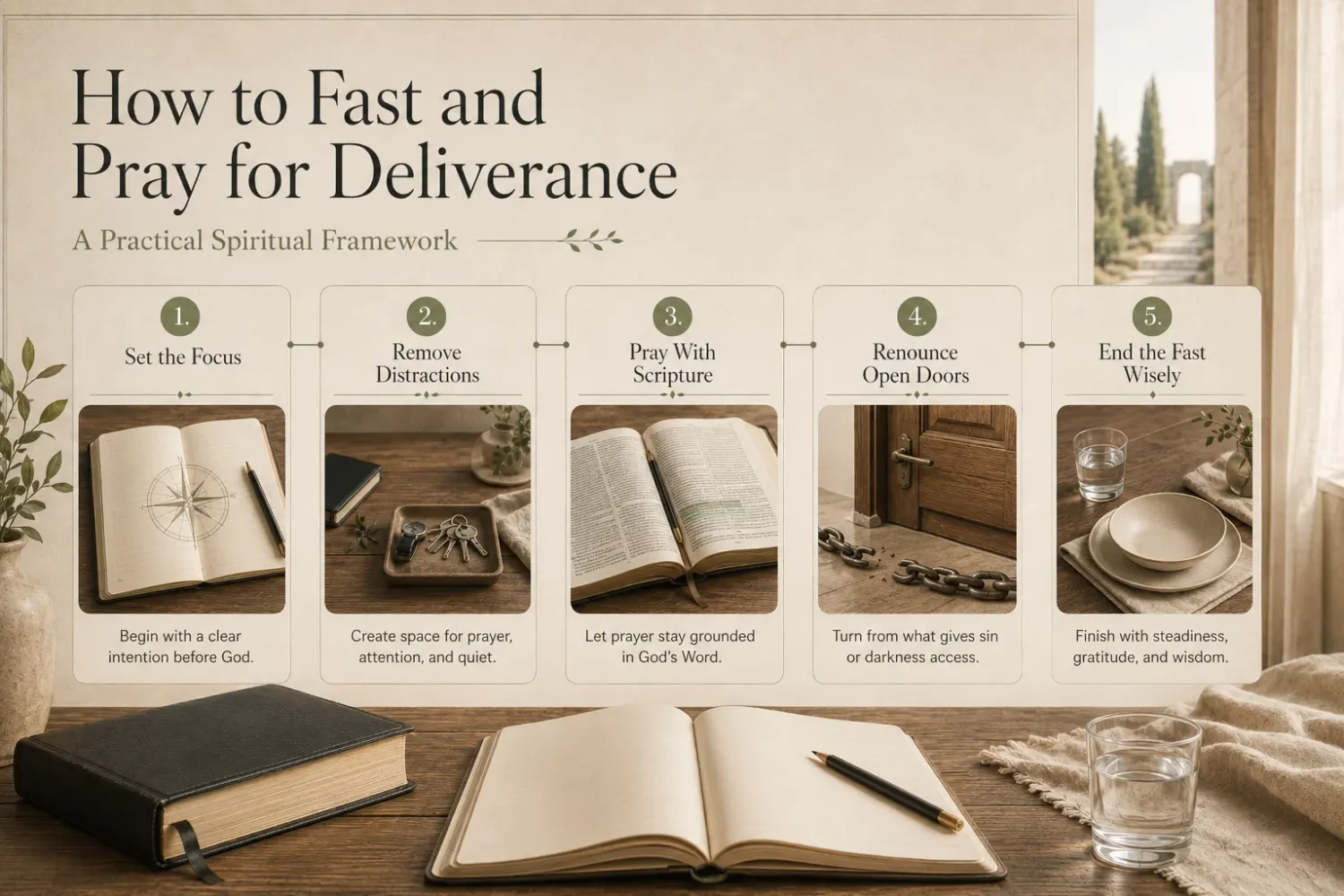
A deliverance fasting guide should be simple, biblical, and safe. You do not need dramatic language or complicated spiritual warfare routines. You need Jesus, truth, humility, and prayer.
The following rhythm can help.
Set the Focus
Before you fast, decide the purpose. Do not make it vague. You might write one sentence in a journal:
“I am fasting to seek God, repent of known sin, renounce agreement with fear, and prepare for deliverance prayer.”
A clear focus protects you from drifting into anxiety. It also helps you avoid treating fasting like a hunger challenge. The fast has a spiritual direction.
Remove Distractions
Reduce what pulls your attention away from God. That may mean less social media, entertainment, unnecessary conversation, or noise. If you skip a meal but spend the whole time scrolling, you may feel hungry without becoming more prayerful.
Use the space intentionally. Read Scripture slowly. Sit quietly. Worship. Ask the Holy Spirit to show you what needs to come into the light.
A partial fast from media, entertainment, or other comforts can also help when a food fast is not wise for your body.
Pray With Scripture
Scripture keeps deliverance prayer grounded. It reminds you that freedom is not based on emotion, fear, or spiritual performance. It is based on Christ.
You can pray from passages such as Psalm 139:23-24, James 4:7, Colossians 1:13-14, and John 8:36.
“If the Son therefore shall make you free, ye shall be free indeed.” - John 8:36
Do not rush past that truth. Deliverance is not about becoming obsessed with darkness. It is about coming under the freedom and lordship of Jesus.
Renounce Open Doors
Renunciation means verbally rejecting sin, lies, agreements, or practices that do not belong to Christ. It is not a magic phrase. It is a clear act of repentance and alignment with God’s truth.
You may pray in simple language:
“Lord Jesus, I confess and renounce every agreement I have made with fear, bitterness, occult practice, sexual sin, pride, and every lie that says I cannot be free. I belong to You. I submit this area to Your lordship. Close every door that I opened, knowingly or unknowingly, and lead me in truth.”
Be specific where the Holy Spirit brings conviction. Avoid frantic searching for hidden doors. God is a Father, not a trap-setter.
If lies and inner wounds are a major part of the struggle, AIIIH’s Disarming Lies inner healing group coaching may help you learn how to bring painful beliefs into God’s truth.
End the Fast Wisely
End your fast with peace, not pressure. Eat gently. Drink water. Avoid overeating as a reaction to discomfort. Thank the Lord for meeting you, even if the fast felt ordinary.
Sometimes fasting brings clear conviction. Sometimes it feels quiet. Sometimes you notice emotions coming to the surface. None of that means God failed to work. Stay steady.
After the fast, write down anything the Lord highlighted: sins to confess, people to forgive, lies to reject, Scriptures to keep praying, or support to seek.
The spirit of people pleasing promises connection, but it often produces distance. It promises peace, but it often produces anxiety. It promises safety, but it often keeps the original wound untouched.
Use Fasting for Deliverance as Preparation, Not Pressure
Fasting can help you seek God with focus, but it should never become a burden that crushes you. Some believers already feel spiritually exhausted. Adding pressure can make them more afraid, not more free.
The Lord is not asking you to earn His attention. He is calling you to come near.
“Submit yourselves therefore to God. Resist the devil, and he will flee from you.” - James 4:7
Notice the order. Submit to God first. Resistance flows from surrender. Fasting can support that surrender, but it cannot replace it.
A healthy deliverance fast should lead to humility, clarity, repentance, and deeper trust in Jesus. If it leads to obsession, fear, self-hatred, or physical danger, step back and seek wise help.
Fasting can help you seek God with focus, but you do not have to walk through deliverance alone. If you need prayer and support, AIIIH offers space to seek freedom in Christ with care and discernment. You can learn more about AIIIH’s deliverance mission, explore related teachings on the Deliverance, Healing, and Spiritual Freedom Blog, or schedule one-on-one Deliverance sessions.
FAQs
Can I fast from something besides food?
Yes, you can fast from something besides food when a food fast is not wise or when another comfort has become distracting. Some people fast from social media, entertainment, sugar, caffeine, or unnecessary noise. The goal is not just removal. The goal is to use that space to seek God.
What should I pray during a deliverance fast?
During a deliverance fast, pray with confession, Scripture, renunciation, listening, worship, and requests for freedom. Keep the prayer simple and honest. Ask the Holy Spirit to reveal sin, lies, wounds, and agreements that need to be brought under the lordship of Jesus.
What if I feel worse while fasting?
If you feel worse while fasting, pay attention to both your body and your soul. Hunger, headaches, irritability, and fatigue can happen, especially if you begin too quickly. If you feel physically unsafe, stop the fast. If difficult emotions surface, bring them to God with honesty and consider seeking pastoral or ministry support.
Should I fast before a deliverance session?
You may fast before a deliverance session if you feel led by the Holy Spirit and can do so safely. It is not required for God to move. A simple one-meal fast, prayer time, confession, and Scripture reading may be enough preparation.
Can I fast if I have health issues?
If you have health issues, fasting from food may not be safe without medical guidance. This includes diabetes, pregnancy, medication needs, eating disorder history, chronic illness, or any condition affected by food or hydration. You can still seek God through prayer, repentance, Scripture, worship, and non-food forms of fasting.
SUPPORT THIS MINISTRY
As a Catholic nonprofit, every dollar given is prayerfully used to build the Kingdom of God — on earth as it is in heaven. Through your generosity, we are able to continue proclaiming the Gospel, setting the captives free, and equipping the Body of Christ to walk in healing, deliverance, and true freedom. Your gift is not just a donation; it is an act of faith that multiplies into souls restored, families healed, and lives transformed by the power of Jesus Christ. We keep nothing for ourselves. All contributions go directly toward sustaining this ministry — providing the tools, technology, staff, and outreach necessary to reach more hearts with the mercy of God. Please prayerfully consider sowing into this mission. Together, we are answering Christ’s call to heal the brokenhearted, proclaim liberty to captives, and set free those who are oppressed.