What Is Demonic Possession? Signs, Discernment, and Safe Help
Written by: Christopher Gomez
Table of Contents
Demonic possession is often presented through frightening stories and dramatic films. The Bible takes a different approach. Its focus is not on creating fear or fascination with demons. Its focus is on the authority of Jesus Christ and His compassion for people who are suffering.
Christians believe spiritual evil is real, but they do not always use terms such as possession, oppression, demonization, influence, and bondage in the same way. Catholic and Protestant traditions also follow different processes when responding to suspected demonic activity.
Careful discernment matters. Unusual behavior, emotional distress, physical illness, trauma, addiction, or mental health symptoms do not automatically prove that a person is possessed. A responsible response considers spiritual concerns alongside medical, psychological, pastoral, and practical factors.
Key Takeaways
Demonic possession refers to an alleged form of serious demonic control over a person’s body or outward faculties.
Reported demonic possession signs are not a diagnostic checklist and may have medical or psychological explanations.
Catholic major exorcism is a formal rite performed only by a bishop or an authorized priest.
Christian spiritual warfare should draw people toward Christ, prayer, Scripture, community, healing, and responsible support.
What Is Demonic Possession?
Demonic possession generally refers to a condition in which an evil spirit is believed to exercise extraordinary control over a person’s body, speech, actions, or outward faculties.
The New Testament often describes affected people as having an “unclean spirit” or being demonized. Some Bible translations use the phrase “demon-possessed,” but the original biblical language does not provide a complete modern system for separating possession, oppression, influence, and bondage.
As a result, Christian traditions may define these terms differently. These differences should be acknowledged rather than treating one definition as the universal position of every Catholic, Protestant, Pentecostal, or deliverance ministry.
What Does the Bible Say About Demonic Possession?
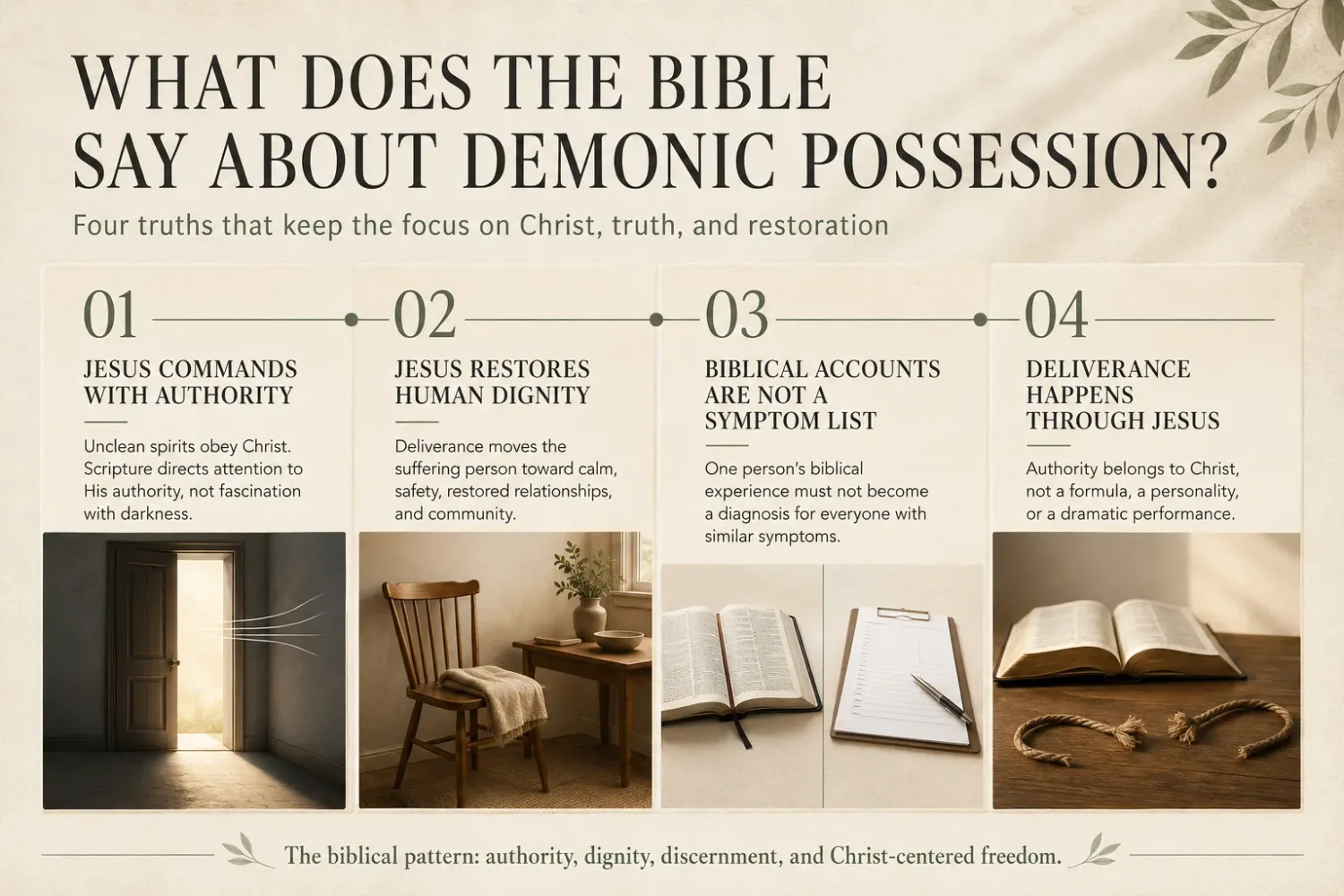
The Bible presents demonic activity as real. Yet demons are never portrayed as equal rivals to God. In every encounter, Jesus remains Lord.
The Gospel accounts emphasize His authority, compassion, and ability to restore people. The person in distress is not treated as entertainment or reduced to a spiritual label.
Jesus Commands Unclean Spirits With Authority
In Mark 1:21-28 and Luke 4:31-37, Jesus encounters a man with an unclean spirit in the synagogue. Jesus does not panic or perform a dramatic ritual. He commands the spirit to leave, and it obeys Him.
“What is this? A new teaching with authority! He commands even the unclean spirits, and they obey him.” - Mark 1:27, WEB
The passage directs attention toward Christ’s authority. It does not encourage believers to become fascinated with demonic names, ranks, or manifestations.
Jesus Restores Human Dignity
Mark 5:1-20 describes a man living among the tombs, isolated from his community and harming himself. After his encounter with Jesus, the man is found clothed, calm, and able to speak with others.
Jesus does more than end spiritual torment. He restores the man’s dignity, relationships, and direction in life.
A healthy Christian response should reflect the same concern. The goal is not to prove that something supernatural has happened. The goal is to help the suffering person move toward truth, safety, freedom, and restored community.
Biblical Accounts Must Not Be Turned Into a Symptom List
Mark 9:14-29 describes a child who experienced convulsions, loss of physical control, and dangerous episodes. The passage identifies a spiritual cause in that specific situation.
It does not teach that seizures, neurological disorders, developmental disabilities, fainting, or similar symptoms are automatically demonic. Scripture also distinguishes sickness from demonic affliction in several passages.
A biblical event may reveal what happened to one person without creating a diagnostic rule for everyone who displays similar behavior.
Deliverance Happens Through the Authority of Jesus
Acts 16:16-18 describes Paul commanding a spirit to leave a young woman in the name of Jesus Christ. The authority belongs to Christ, not to a prayer formula or the personality of the minister.
The passage does not give untrained people permission to attempt confrontational exorcisms. Spiritual authority must remain joined to humility, accountability, wisdom, and concern for the person receiving ministry.
Signs of Demonic Possession
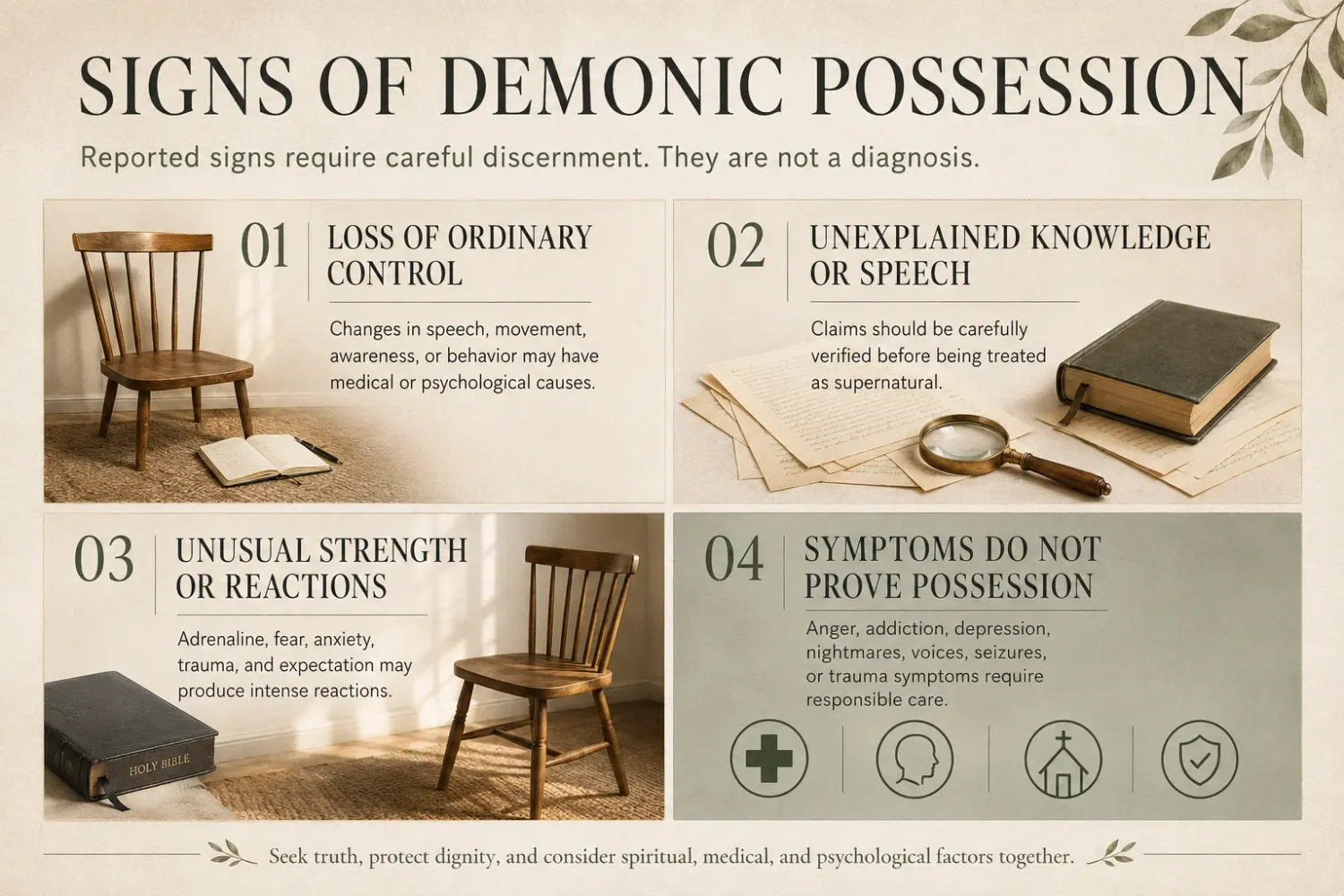
Reported demonic possession signs and demonic possession symptoms must be approached with extreme caution. They cannot confirm possession on their own.
A person may display unusual behavior for many reasons. Possible causes include trauma, neurological illness, medication effects, substance use, sleep disorders, severe anxiety, psychosis, dissociation, or other mental and physical health conditions.
Serious Loss of Ordinary Control
Some reported cases involve episodes in which a person appears to lose control of speech, movement, awareness, or behavior.
Loss of control is not proof of demonic activity. Seizures, dissociation, trauma responses, neurological conditions, intoxication, medication reactions, and severe mental health episodes can produce similar outward effects.
Medical assessment should not be delayed because a family member or ministry leader believes the cause may be spiritual.
Knowledge or Speech That Appears Unexplained
Traditional Catholic investigations may consider claims that a person understands an unknown language or knows hidden information they could not normally know.
Such claims require careful verification. The person may have encountered the language or information before, even if others were unaware of it. Memory, suggestion, exaggeration, misunderstanding, and prior exposure should all be considered.
Something that has not yet been explained should not automatically be called supernatural.
Unusual Strength or Reactions to Sacred Things
Some accounts describe unusual physical strength or intense reactions during prayer, worship, Scripture reading, or the presence of religious objects.
These reactions may be considered during a formal investigation, but they do not prove possession. Adrenaline can increase physical strength during moments of distress. Religious trauma, anxiety, fear, expectation, and emotional suggestion can also produce strong reactions in spiritual settings.
No one should secretly test, provoke, restrain, record, or embarrass the person to see how they react.
Symptoms That Do Not Prove Possession
Anger, addiction, depression, intrusive thoughts, nightmares, hearing voices, resistance to attending church, relationship conflict, sexual struggles, seizures, or trauma symptoms do not automatically indicate demonic possession.
A person may need medical care, mental health treatment, pastoral support, prayer, or several forms of help at the same time. Receiving professional care does not deny spiritual reality or demonstrate a lack of faith.
Prayer and responsible healthcare should not be treated as enemies.
How to Respond to Possible Demonic Activity
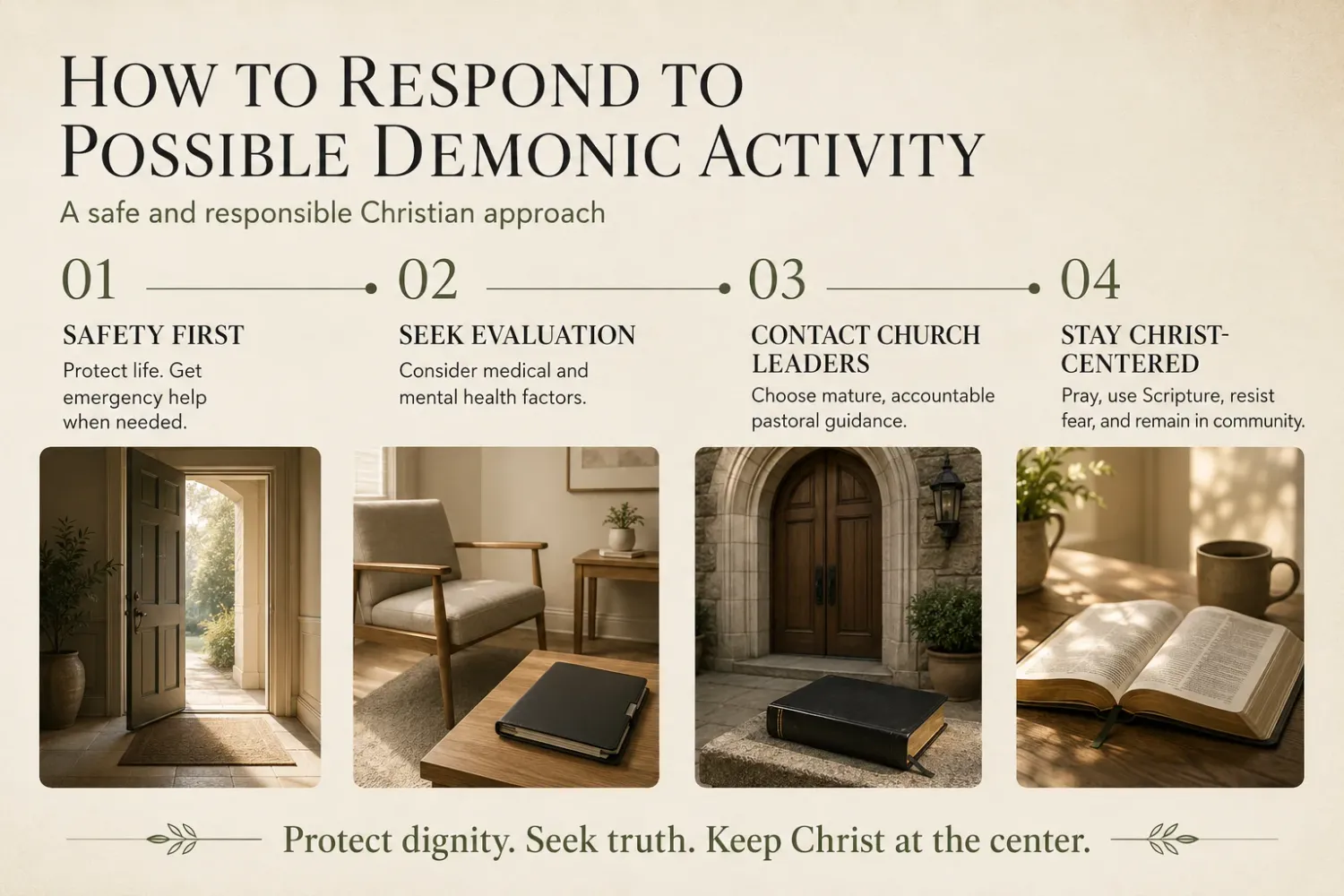
The first step is not to assign a spiritual diagnosis. The first step is to protect the person and seek the truth with patience.
Avoid making accusations, declaring someone possessed, or attempting to force a manifestation. A careless spiritual label may increase fear, delay treatment, damage relationships, or deepen an existing mental health crisis.
Address Immediate Safety First
When someone is threatening violence, attempting self-harm, experiencing seizures, losing consciousness, or showing severe confusion, seek emergency help.
Do not assume that prayer alone is enough during an immediate crisis. Prayer can continue while qualified professionals provide urgent care.
Protect the person’s privacy. Do not film, livestream, photograph, or publicly describe their behavior. Their suffering should never become ministry promotion or entertainment.
Seek Medical and Mental Health Evaluation
The Catholic Church requires careful discernment between demonic possession and illness. Its official teaching states that psychological illness is different from possession and belongs to the field of medical science.
A professional evaluation may identify a treatable condition. It may also provide useful information to pastors or diocesan leaders reviewing the case.
No pastor, prayer minister, friend, or family member should tell someone to stop prescribed medication without consulting the professional responsible for their care.
Contact Accountable Church Leadership
Catholic readers should begin by contacting their parish priest. The priest may then follow the proper diocesan process when further investigation is warranted.
Do not search online for a self-appointed exorcist. A Catholic major exorcism must remain under the authority of the local bishop.
Christians from other traditions should seek mature pastors or denominational leaders who are accountable to a recognized church. Safe leaders protect confidentiality, cooperate with healthcare professionals, and avoid making immediate claims of possession.
Be cautious of anyone who guarantees freedom, demands excessive payment, encourages isolation from family, creates panic, or tells a person to reject medical care.
Practice Christ-Centered Spiritual Warfare
Spiritual warfare should make a believer more focused on Christ, not more afraid of demons.
For Catholics, ordinary spiritual protection includes prayer, Scripture, confession, the Eucharist, forgiveness, repentance, and life within the Church. Other Christian traditions similarly emphasize prayer, worship, Scripture, Christian community, obedience, and resisting temptation.
“Be subject therefore to God. Resist the devil, and he will flee from you.” - James 4:7, WEB
Submission to God comes before resistance. Healthy spiritual warfare includes turning away from sin, renewing the mind with truth, forgiving others, receiving healing, and remaining accountable within Christian community.
When occult involvement, destructive spiritual agreements, or habitual sin is a concern, AIIIH’s teaching on demonic entry points and spiritual discernment offers further context. Lasting freedom may also require discipleship and inner healing, as explained in why deliverance does not always seem to last.
Find Safe Help for Suspected Demonic Possession
Suspected demonic possession requires humility, patience, proper authority, and responsible evaluation. Catholic readers should contact their parish or diocese rather than attempting exorcism themselves. Medical and mental health care should continue whenever it is needed.
AIIIH does not present deliverance ministry as a replacement for emergency services, professional healthcare, or an authorized Catholic exorcist. For appropriate non-emergency concerns involving spiritual oppression, bondage, inner wounds, or the need for prayerful discernment, AIIIH offers Christ-centered prayer and support.
If you are experiencing spiritual oppression or bondage in your life, we welcome you to our one-on-one Deliverance sessions, available daily, and our monthly healing call, held on the first Tuesday of every month.
Fear does not have to control the next step. The Gospel accounts show Jesus moving toward suffering people with authority and compassion. Wise help protects human dignity, seeks truth, and keeps the person’s attention on Christ rather than darkness.
FAQs
Is demonic possession common?
Demonic possession is not considered common. The Catholic Church treats genuine cases as rare and requires careful investigation before a major exorcism may be authorized. Many suspected cases are found to involve medical, psychological, emotional, or practical factors.
Can a demon possess a person’s soul?
A demon cannot own a person’s soul or become more powerful than God. Catholic explanations of possession generally describe extraordinary control over the body or outward faculties rather than ownership of the person’s soul. Every person remains made in the image of God and worthy of dignity and care.
Can demonic possession be permanent?
Demonic possession should not be treated as a permanent identity or a power beyond the authority of Jesus Christ. At the same time, no ministry should promise immediate freedom or guarantee a specific timeline. Safe support may involve prayer, formal Church discernment, healthcare, discipleship, repentance, healing, and continued pastoral care.
SUPPORT THIS MINISTRY
As a Catholic nonprofit, every dollar given is prayerfully used to build the Kingdom of God — on earth as it is in heaven. Through your generosity, we are able to continue proclaiming the Gospel, setting the captives free, and equipping the Body of Christ to walk in healing, deliverance, and true freedom. Your gift is not just a donation; it is an act of faith that multiplies into souls restored, families healed, and lives transformed by the power of Jesus Christ. We keep nothing for ourselves. All contributions go directly toward sustaining this ministry — providing the tools, technology, staff, and outreach necessary to reach more hearts with the mercy of God. Please prayerfully consider sowing into this mission. Together, we are answering Christ’s call to heal the brokenhearted, proclaim liberty to captives, and set free those who are oppressed.