Demonic Entry Points: How Demons Gain Legal Rights
Written by: Christopher Gomez
Table of Contents
Demonic entry points are areas where evil may gain influence, reinforce bondage, or exploit spiritual vulnerability. Christians also use terms such as open doors, footholds, agreements, or legal rights. Used carefully, these terms never suggest that demons own a person or rival Jesus Christ.
Scripture calls believers to take spiritual warfare seriously without fear. The goal is to bring sin, wounds, lies, and destructive patterns into the light so truth and healing can take root.
Key Takeaways
Demonic entry points are possible areas of influence, not proof of possession.
“Legal rights” is ministry shorthand, not a direct biblical phrase.
Personal sin requires repentance, while trauma requires compassion and healing.
Lasting freedom grows through Christ, truth, the sacraments, and wise support.
What Are Demonic Entry Points?
A demonic entry point is an area of life that may become vulnerable to deception, temptation, oppression, or bondage. It may involve a repeated choice, such as ongoing sin or occult involvement. It may also involve an unresolved wound where fear, shame, or a false belief has taken hold.
The Bible does not give a mechanical explanation of how demons enter a person. It does warn believers not to “give place to the devil” and calls them to resist evil, reject idolatry, forgive others, and remain rooted in Christ.
“Be angry, and don’t sin. Don’t let the sun go down on your wrath, and don’t give place to the devil.” - Ephesians 4:26–27, WEB
A foothold is not ownership. It is an opportunity for evil to exploit something that has not been brought under Christ’s truth and lordship.
Does the Bible Teach Demonic Legal Rights?
The phrase legal rights for demons does not appear in Scripture. Deliverance ministries often use it as shorthand for a foothold, agreement, or area of vulnerability. Some Christians reject the phrase because it can sound as though Satan holds a lawful contract over a believer. That concern deserves respect.
The biblical emphasis belongs on Christ’s authority. Colossians 1:13 says God has rescued believers from the domain of darkness, while Colossians 2:15 describes Christ’s victory over spiritual powers.
“Having stripped the principalities and the powers, he made a show of them openly, triumphing over them in it.” - Colossians 2:15, WEB
“Legal rights” should not mean rightful demonic ownership. It can describe an area where a person continues agreeing with sin, deception, or occult power. Repentance restores agreement with God and removes what the enemy may be exploiting.
The Vatican’s teaching on Christian faith and demonology affirms demonic evil while defending human responsibility, discernment, and confidence in God’s greater power.
How Do Demonic Entry Points Open?
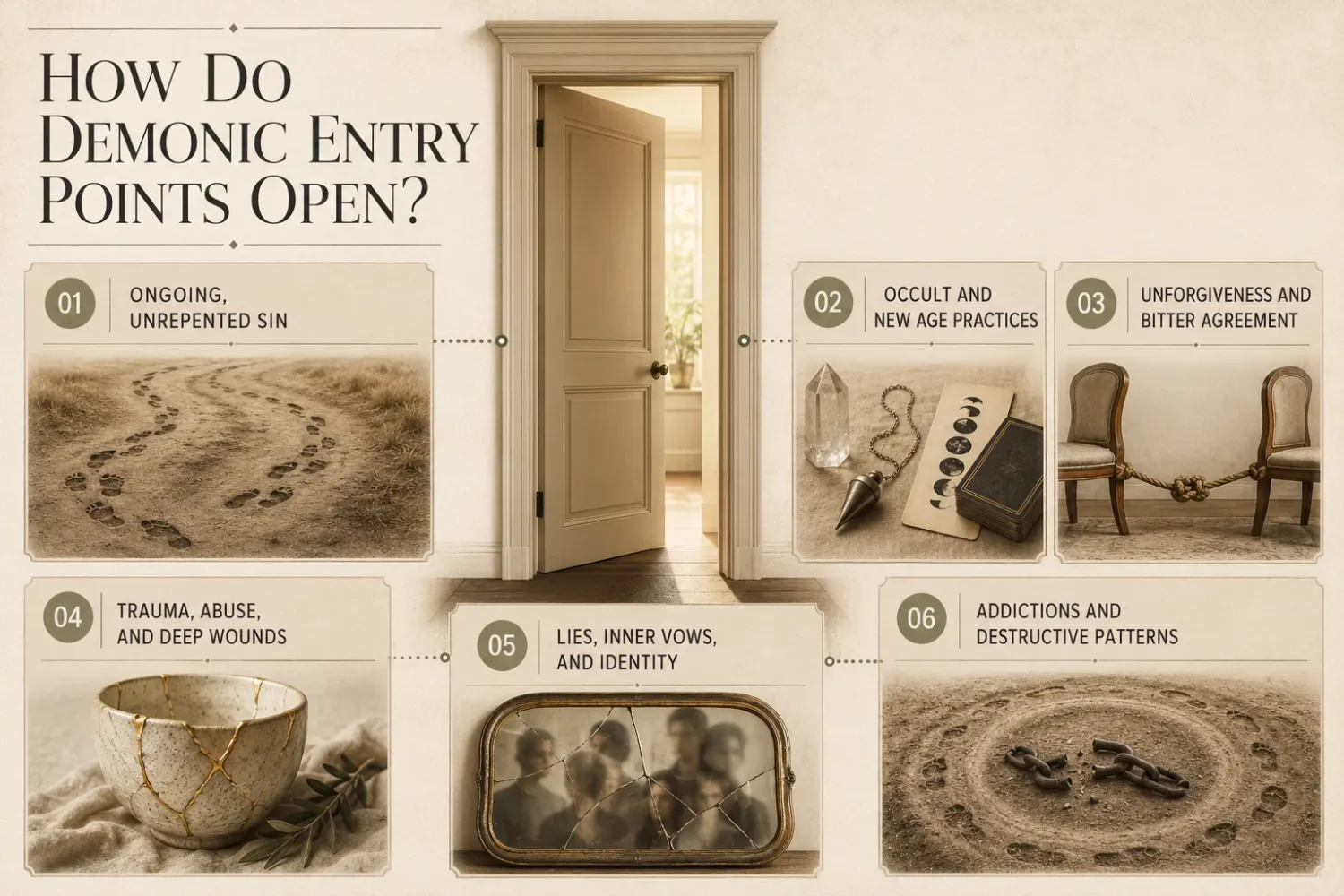
No list explains every case. Not every temptation, illness, addiction, intrusive thought, emotional wound, or repeated setback is demonic. Still, several patterns deserve careful discernment.
Ongoing, Unrepented Sin
Persistent sin can harden the heart and deepen deception. The concern is not that one failure instantly gives a demon ownership. Danger grows when someone protects the sin, refuses correction, and continues agreeing with what God calls harmful.
Repentance includes confession, concrete change, and accepting help when a pattern is difficult to break.
Occult and New Age Practices
Scripture forbids seeking supernatural power or hidden knowledge apart from God. Witchcraft, divination, spirit communication, spell work, channeling, and deliberate invocation of spirits oppose trust in the Lord.
Past involvement does not require panic. Confess it, renounce it, remove the practice from your life, and seek pastoral guidance. Christ’s authority is greater than your history.
Unforgiveness and Bitter Agreement
Unforgiveness can keep anger, accusation, and revenge active. Forgiveness does not call evil good. It does not require restored trust, immediate reconciliation, or access for an unsafe person.
Forgiveness releases personal vengeance to God. Healthy boundaries, legal protection, and accountability may still be necessary.
Trauma, Abuse, and Deep Wounds
Trauma survivors are not guilty for what was done to them. Abuse is the responsibility of the abuser. A survivor did not invite oppression by being harmed.
Trauma can affect emotions, sleep, concentration, relationships, and a person’s sense of safety. The National Institute of Mental Health’s guidance on coping with traumatic events recommends professional help when symptoms persist or interfere with daily life. Prayer can work alongside qualified mental health care.
Lies, Inner Vows, and Identity
Pain can lead to inward conclusions such as “I will never trust anyone,” “I am unwanted,” or “God will not protect me.” These may begin as survival responses but later shape identity and relationships.
Freedom involves identifying the lie, grieving what happened, and receiving God’s truth. Disarming Lies inner healing can help believers examine these agreements without blaming them for their wounds.
Addictions and Destructive Patterns
Addictions involve the body, emotions, relationships, habits, and spiritual life. It is careless to label every addiction as demonic, but spiritual bondage should not be ignored when careful discernment points to it.
A wise response may include repentance, prayer, medical care, counseling, support groups, accountability, and practical change.
Demonic Oppression, Demonization, and Possession
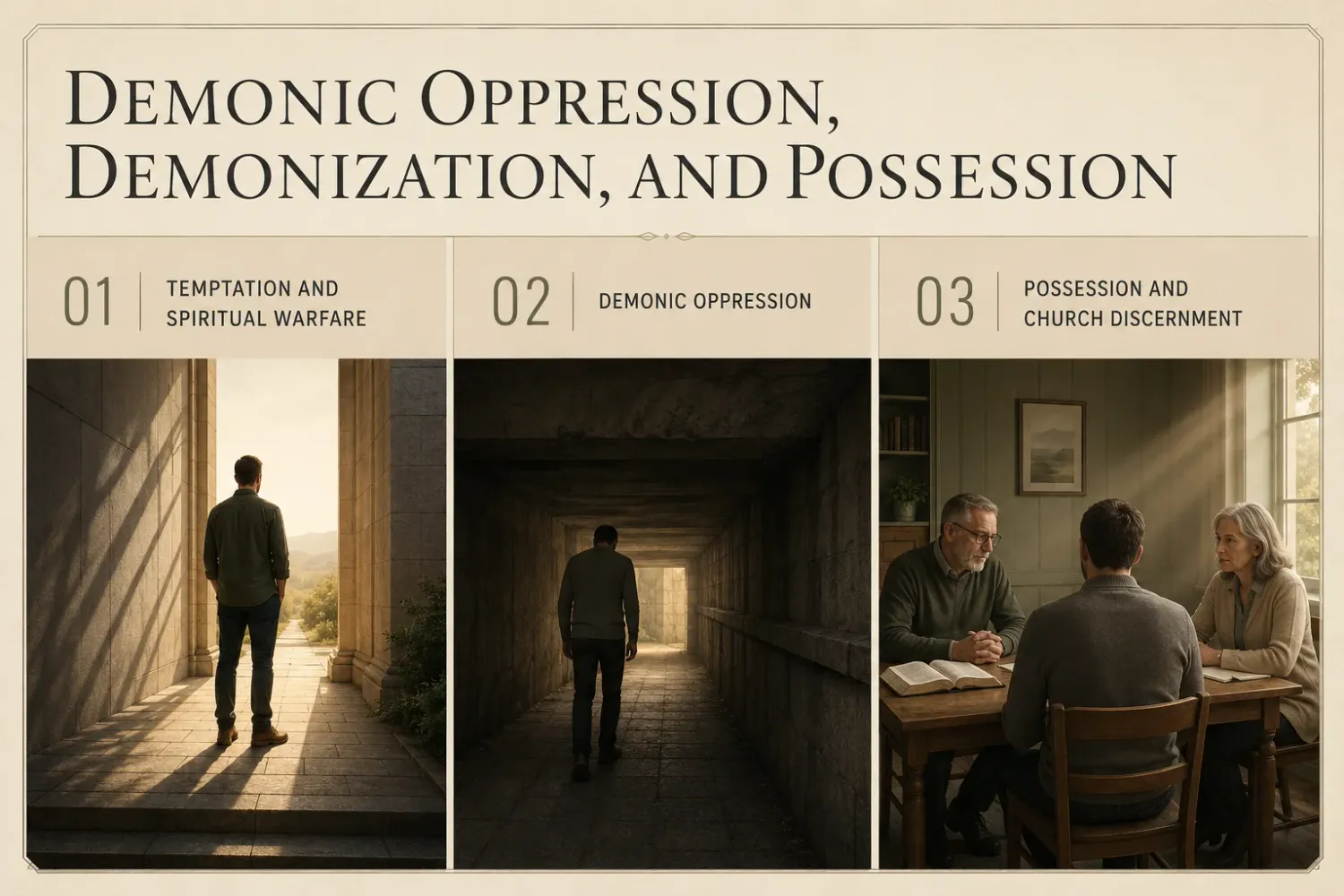
Christians use these terms differently. Scripture teaches spiritual conflict, but it does not provide a simple diagnostic chart for every form of influence.
Temptation and Spiritual Warfare
Temptation is not proof of demonization. Jesus was tempted without sin. Believers are told to put on the armor of God in Ephesians 6:10–18 and to resist the devil through submission to God.
“Be subject therefore to God. Resist the devil, and he will flee from you.” - James 4:7, WEB
Ordinary spiritual warfare includes prayer, Scripture, obedience, worship, confession, fellowship, and resisting lies. The focus is faithful life in Christ, not constant attention to the enemy.
Demonic Oppression
Demonic oppression usually refers to persistent external harassment, pressure, accusation, or influence. Demonization is a broader ministry term used for varying degrees of influence. Neither should become a quick diagnosis.
Discernment also considers trauma, mental health, physical health, relationships, substance use, and sleep. People seeking prayer should not be told to stop medication or abandon professional care. Those who need prayer for sickness can pursue physical healing prayer while continuing appropriate medical treatment.
Possession and Church Discernment
The Catholic Church treats demonic possession as rare and distinct from ordinary temptation or oppression. The Catechism’s teaching on exorcism says a major exorcism may be performed only by a priest with the bishop’s permission and requires care to distinguish possession from illness.
The USCCB also warns against sensationalism and says medical and mental health professionals should be involved in evaluation. Major exorcism is not a private experiment for untrained people.
How to Close Demonic Entry Points
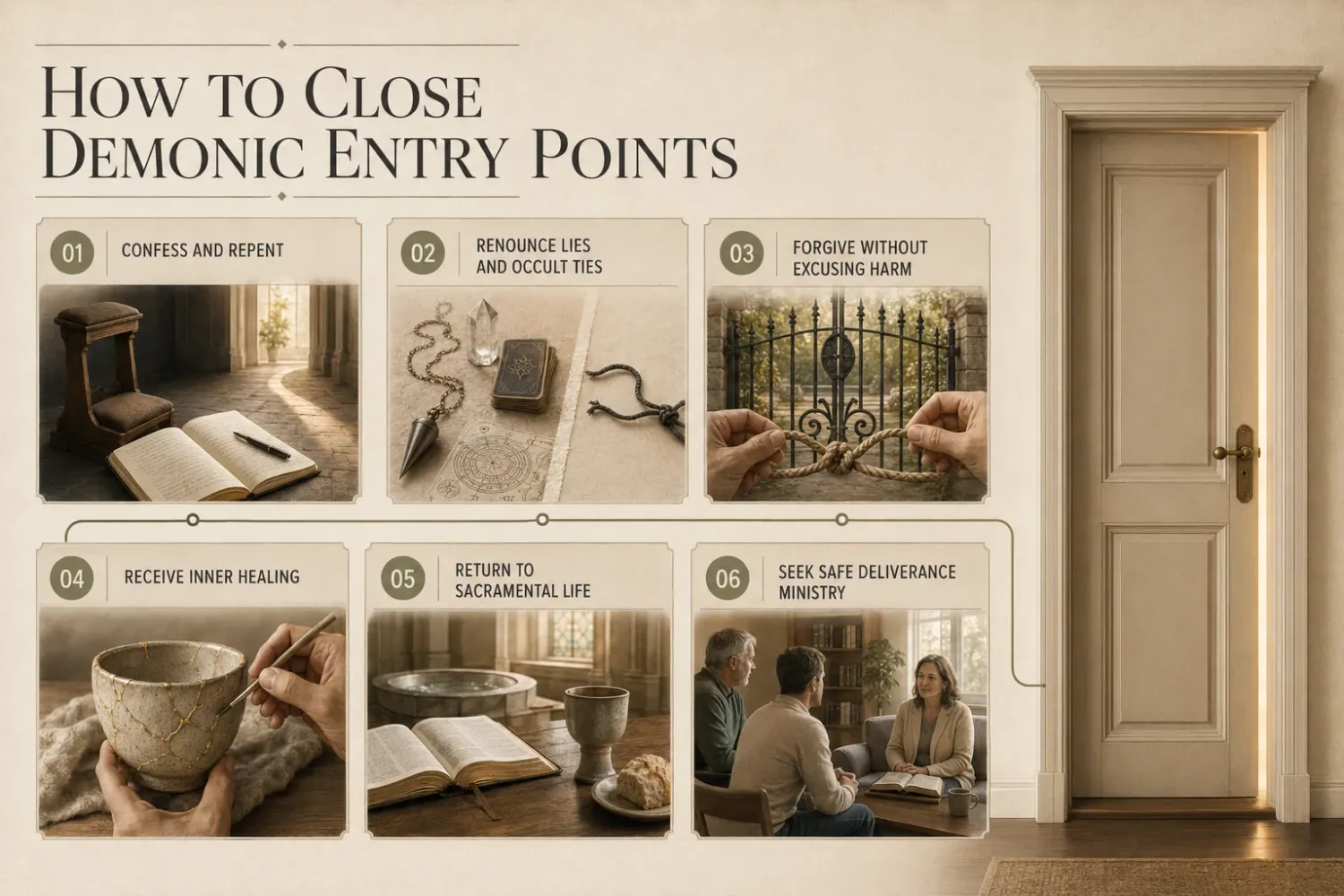
Closing an entry point is not a magic ritual. It is a Christ-centered process of turning from sin, rejecting deception, receiving healing, and learning to live in truth.
Confess and Repent
Bring known sin honestly before God. Name it without excuses, receive Christ’s mercy, and make practical changes. When appropriate, use the Sacrament of Reconciliation and seek accountability.
Renounce Lies and Occult Ties
Renunciation clearly withdraws agreement. You may pray, “Jesus, I reject my involvement in this practice and place my trust in You alone.” Remove ongoing occult practices and seek guidance about objects directly connected with them. Avoid superstition and searches for hidden curses.
Forgive Without Excusing Harm
Release revenge to God, even when feelings take time to follow. Forgiveness may be a process. It can exist alongside grief, justice, boundaries, and no-contact decisions when safety requires them.
Receive Inner Healing
Ask the Holy Spirit to reveal lies connected to painful memories and bring truth where shame or fear has ruled. Inner healing should be gentle and never forced. Survivors should remain free to pause and involve a licensed professional.
Return to Sacramental Life
For Catholics, regular Confession, the Eucharist, prayer, Scripture, and life within the Church strengthen communion with Christ. The sacraments are gifts of grace, not techniques for controlling spiritual outcomes.
Seek Safe Deliverance Ministry
Qualified deliverance ministry should be calm, accountable, centered on Christ, and respectful of consent. It should avoid public spectacle and recognize when pastoral, medical, or psychological support is needed.
AIIIH offers one-on-one Deliverance sessions for people seeking prayer and careful discernment. Deliverance should lead toward discipleship, renewed thinking, healthy relationships, and lasting growth.
Move From Demonic Entry Points Into Freedom in Christ
Freedom is not built on fear of what may have entered. It is built on confidence in Jesus. He forgives sin, heals wounds, renews the mind, and teaches believers to stand firm.
Luke 11:24–26 warns against leaving a life spiritually empty after freedom. The answer is a life filled with Christ through prayer, truth, the sacraments, community, obedience, and wise boundaries. Deliverance may address a spiritual burden, but lasting freedom also requires formation.
If you are experiencing the effects of demonic oppression in your life, we welcome you to our one-on-one Deliverance sessions, available daily, and our monthly healing call, held on the first Tuesday of every month.
FAQs
Can a door open without my knowledge?
A door can involve a lie, pattern, or past involvement you did not fully understand. God does not trap you through hidden technicalities. Ask Him to reveal what needs attention and seek wise discernment rather than fearfully searching for unknown causes.
Can demonic entry points affect Christians?
Demonic entry points can affect Christians through temptation, deception, or oppression, but no demon has authority equal to Christ. Christian traditions differ on possession terminology, so focus on prayer, repentance, truth, and responsible pastoral care.
Can objects create spiritual access?
Objects can be tied to occult practices or deliberate spiritual dedication, but ordinary objects should not become a source of superstition. If an item was directly used in occult activity, renounce the involvement and ask a trusted priest or ministry leader how to handle it calmly.
Can family sin affect later generations?
Family sin can affect later generations through learned behavior, trauma, addiction, secrecy, and spiritual influence. Personal guilt is not automatically inherited. Each person remains responsible for their response to God, and Christ can break destructive family patterns.
Should I attempt self-deliverance?
Self-deliverance should be limited to ordinary Christian practices such as repentance, forgiveness, renouncing known sin, and asking Jesus for protection. Do not attempt a major exorcism or use improvised rituals. Seek a qualified ministry or authorized priest.
SUPPORT THIS MINISTRY
As a Catholic nonprofit, every dollar given is prayerfully used to build the Kingdom of God — on earth as it is in heaven. Through your generosity, we are able to continue proclaiming the Gospel, setting the captives free, and equipping the Body of Christ to walk in healing, deliverance, and true freedom. Your gift is not just a donation; it is an act of faith that multiplies into souls restored, families healed, and lives transformed by the power of Jesus Christ. We keep nothing for ourselves. All contributions go directly toward sustaining this ministry — providing the tools, technology, staff, and outreach necessary to reach more hearts with the mercy of God. Please prayerfully consider sowing into this mission. Together, we are answering Christ’s call to heal the brokenhearted, proclaim liberty to captives, and set free those who are oppressed.