
Spiritual Discernment in Relationships: Demonic Influence?

Written by: Christopher Gomez
Table of Contents
Spiritual discernment in relationships matters because romantic bonds can deeply affect your walk with God. A relationship can encourage prayer, purity, humility, truth, and peace. It can also pull your heart into confusion, compromise, fear, secrecy, or spiritual heaviness.
But discernment is not suspicion. It is not looking at every weakness in your partner and calling it demonic. It is prayerfully testing what is happening through Scripture, spiritual fruit, wise counsel, and peace.
A partner cannot overpower Christ in a believer’s life. Jesus is Lord. Still, close relationships can influence your obedience, identity, emotions, decisions, spiritual focus, and sense of peace. That is why Christians need wisdom when a relationship begins to feel spiritually heavy, confusing, controlling, or ungodly.
Key Takeaways
Discernment is prayerful testing, not fear-based accusation.
Not every hard relationship is demonic. Some problems are sin, immaturity, trauma, dysfunction, or abuse.
A relationship should produce clearer love for Jesus, truth, purity, humility, and peace.
If there is abuse, coercion, stalking, threats, or control, safety must come before relationship repair.
What Is Spiritual Discernment in Relationships?
Spiritual discernment in relationships is the ability to recognize what is helping you follow Jesus and what is pulling you away from Him. It asks honest questions: Does this relationship strengthen obedience or weaken it? Does it produce peace or confusion? Does it bring truth into the light or keep things hidden?
Scripture tells believers to test spiritual influence instead of accepting everything at face value:
“Beloved, don’t believe every spirit, but test the spirits, whether they are of God, because many false prophets have gone out into the world.” - 1 John 4:1
That verse does not tell Christians to become paranoid. It teaches spiritual sobriety. Not every voice, attraction, dream, feeling, or emotional pull should be trusted without testing.
In relationships, discernment looks at fruit over time. It watches patterns. It asks whether the relationship is leading you toward Christlike love or away from it. It also listens to mature believers who can see clearly when your emotions are loud.
Discernment is also humble. It does not only ask, “What is wrong with them?” It also asks, “Lord, what are You showing me about my own heart, choices, wounds, desires, and boundaries?”
Can Your Partner Bring Demonic Influence?
A partner cannot “bring demons into your life” in a way that makes Christ weak or powerless. If you belong to Jesus, you are not helpless. The Holy Spirit lives in believers, and no romantic relationship has more authority than the Lord.
At the same time, relationships can open doors to spiritual pressure when sin, deception, occult involvement, manipulation, addiction, sexual compromise, idolatry, or rebellion becomes normalized. Demonic influence through relationships is not always dramatic. Sometimes it looks like slow compromise, constant confusion, shame, isolation, or a growing distance from God.
A partner’s choices can affect the spiritual atmosphere around the relationship. If someone mocks your faith, pressures you into sin, pulls you away from prayer, hides serious behavior, or uses spiritual language to control you, you should not ignore it.
This does not mean you should label your partner demonized because you feel uneasy. Feelings need testing. Fear needs testing too. The better question is not, “Is my partner possessed?” The better question is, “What fruit is this relationship producing in my life, and is the Lord warning me to respond?”
If sexual compromise is part of the pattern, repentance and clarity matter. AIIIH has related teaching on forgiveness and next steps after sex before marriage, which may help if guilt, shame, or confusion is clouding your discernment.
Signs a Relationship May Be Spiritually Harmful
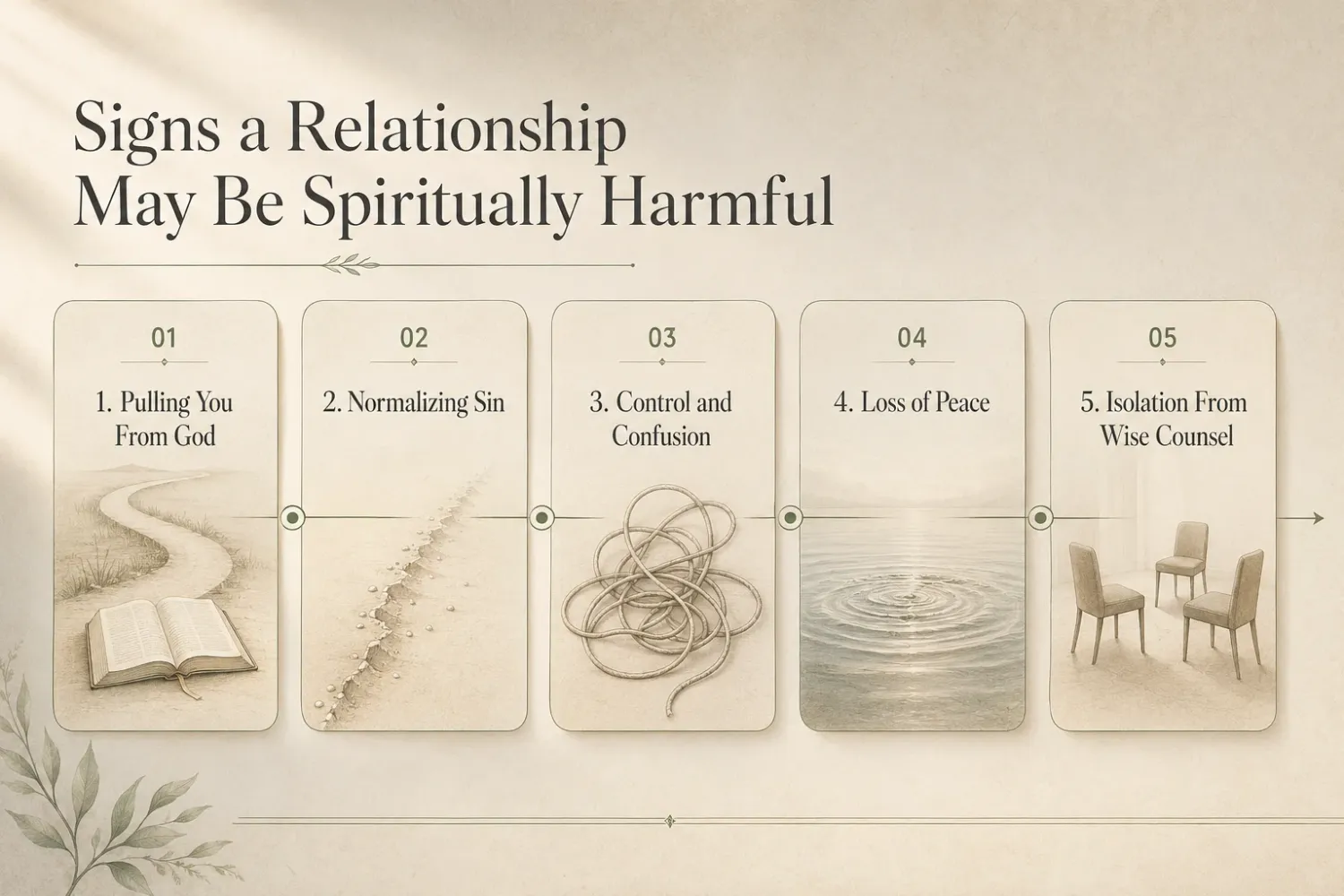
A spiritually harmful relationship does not always begin with obvious danger. It may begin with strong attraction, emotional intensity, or the feeling that you cannot think clearly when you are with the person.
One bad argument does not prove spiritual attack. One difficult season does not mean the relationship is ungodly. But repeated fruit should be taken seriously.
Pulling You From God
A relationship may be spiritually harmful when it steadily pulls you away from prayer, Scripture, worship, church, wise counsel, repentance, or obedience.
This can happen directly or subtly. A partner may mock your faith. They may pressure you to lower your convictions. They may make you feel embarrassed for wanting purity, prayer, or spiritual accountability.
The issue is not whether both people are perfect. No couple is. The issue is whether the relationship makes it easier or harder to follow Jesus with a whole heart.
Normalizing Sin
A relationship becomes dangerous when sin is treated as normal, harmless, or unavoidable. Sexual compromise, lying, secrecy, drunkenness, manipulation, occult practices, bitterness, or rebellion should not be excused because there is love or chemistry.
Grace is not permission to stay in bondage. Real love helps bring things into the light. It does not pressure you to violate conviction and then call your discomfort “religious fear.”
When sin becomes normal, discernment becomes cloudy. The heart begins to adjust to what it once resisted.
Control and Confusion
Control is a serious red flag. It may look like constant monitoring, jealousy, guilt, pressure, punishment, spiritual threats, or making you feel responsible for another person’s emotions.
Some people use spiritual language to control. They may say God told them you must stay, marry them, obey them, or stop listening to anyone else. True spiritual leadership does not erase your conscience, safety, or access to wise counsel.
If control and manipulation are part of the pattern, AIIIH’s teaching on the Jezebel spirit and false authority may help you understand the spiritual pattern without rushing into accusation.
Loss of Peace
Peace is not the same as comfort. Sometimes God leads you into hard obedience, and it may feel painful. But the peace of God does not usually produce constant panic, dread, shame, secrecy, and confusion.
If you feel spiritually drained every time you engage the relationship, slow down. Ask whether you are grieving the Holy Spirit, ignoring red flags, or carrying emotional pressure that is not yours to carry.
The fruit of the Spirit gives a helpful test:
“But the fruit of the Spirit is love, joy, peace, patience, kindness, goodness, faith, gentleness, and self-control. Against such things there is no law.” - Galatians 5:22-23
A relationship does not have to be easy to be godly. But over time, godly fruit should become more visible, not less.
Isolation From Wise Counsel
A spiritually unhealthy relationship often isolates you. You may stop talking honestly with friends, family, pastors, mentors, or mature believers because you already know they will be concerned.
Isolation can feel romantic at first. “No one understands us” can sound loyal. But secrecy weakens discernment. Wise counsel protects you from making permanent decisions while emotionally overwhelmed.
If a partner pressures you to cut off everyone who raises concerns, take that seriously.
Spiritual Attack or Relationship Dysfunction?
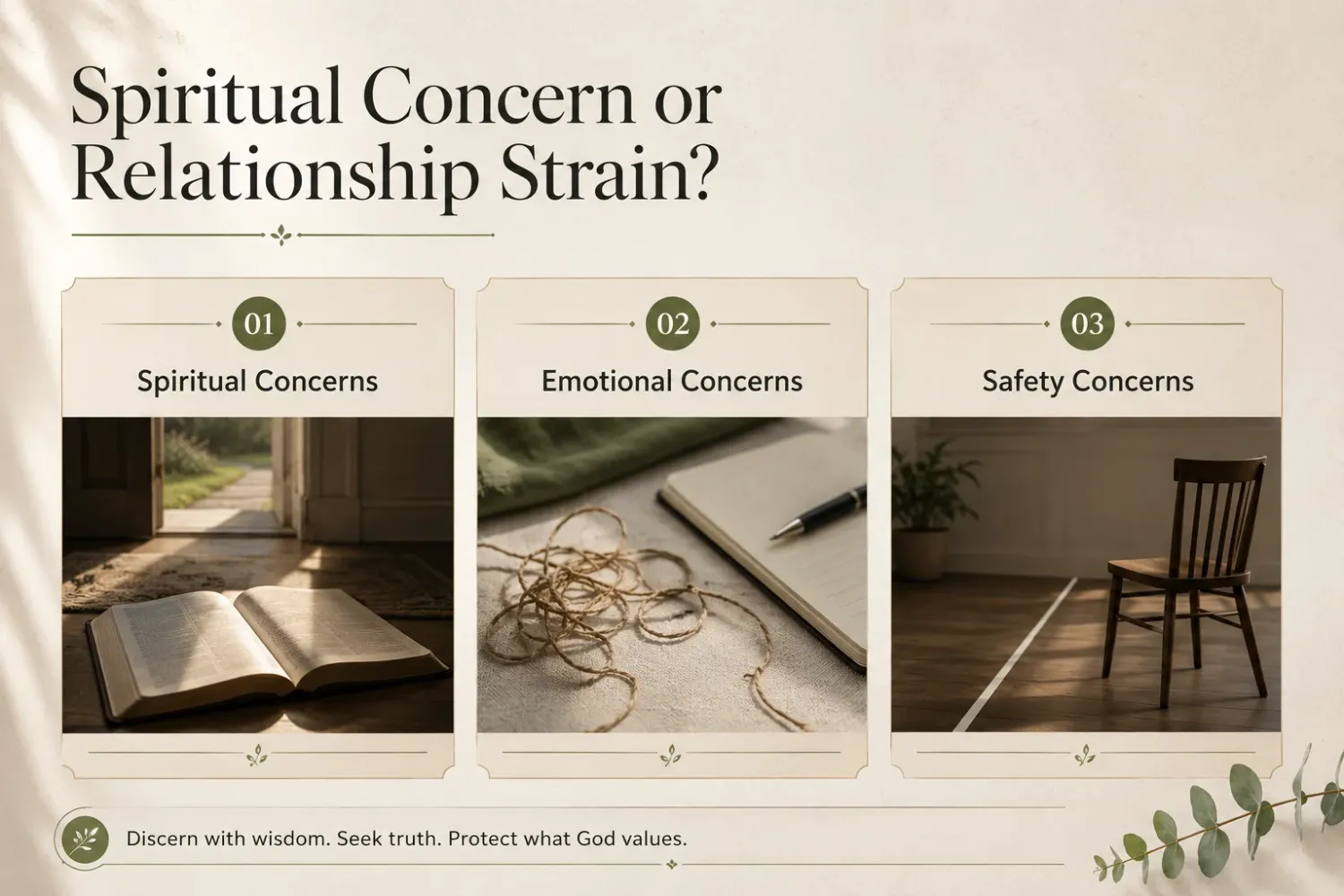
Many believers ask whether they are facing spiritual attack tied to a relationship or normal relationship dysfunction. The answer is not always simple.
Some situations are mainly spiritual warfare. Some are emotional immaturity. Some are trauma patterns. Some are poor communication. Some are incompatibility. Some are abuse. Often, more than one layer is present.
The goal is not to choose a dramatic label. The goal is to respond wisely.
Spiritual Red Flags
Spiritual red flags often involve repeated pressure away from Jesus. These may include:
Pressure to compromise biblical convictions
Occult practices, witchcraft, divination, or spiritual mixture
Mocking prayer, Scripture, repentance, or holiness
Persistent deception and hidden sin
A pattern of confusion after spiritual progress
Strong fear, shame, or oppression connected to the relationship
Spiritual language used to manipulate or silence you
If the relationship consistently produces distance from God, do not dismiss it as “just emotions.” Bring it before the Lord and invite mature counsel.
Emotional Red Flags
Some issues are not directly demonic, but they still matter. Emotional red flags may include immaturity, unresolved wounds, jealousy, avoidance, constant blame, emotional dependency, fear of abandonment, or inability to communicate honestly.
These issues may need counseling, discipleship, boundaries, repentance, or time. They should not be ignored just because they are not obviously spiritual warfare.
A person can love God and still be unhealthy in relationships. Love does not remove the need for maturity.
Abuse Red Flags
Abuse must be treated with seriousness. If there are threats, stalking, coercion, physical harm, sexual pressure, financial control, intimidation, isolation, monitoring, or fear of what your partner will do, do not spiritualize the danger.
Safety comes first. The National Domestic Violence Hotline says people are not to blame for abusive actions against them and offers advocates who can help with personalized safety planning. Their relationship abuse safety planning resource is a practical place to start in the U.S.
Leaving an abusive relationship can increase danger in some cases, so planning with trusted support matters. WomensLaw explains that safety planning helps a person think through safer options when ending an abusive relationship, and local domestic violence organizations may help with shelter, support, counseling, legal referrals, or safety plans.
Prayer is powerful, but prayer should not be used as a reason to stay in danger.
How to Discern Spiritual Connections Wisely
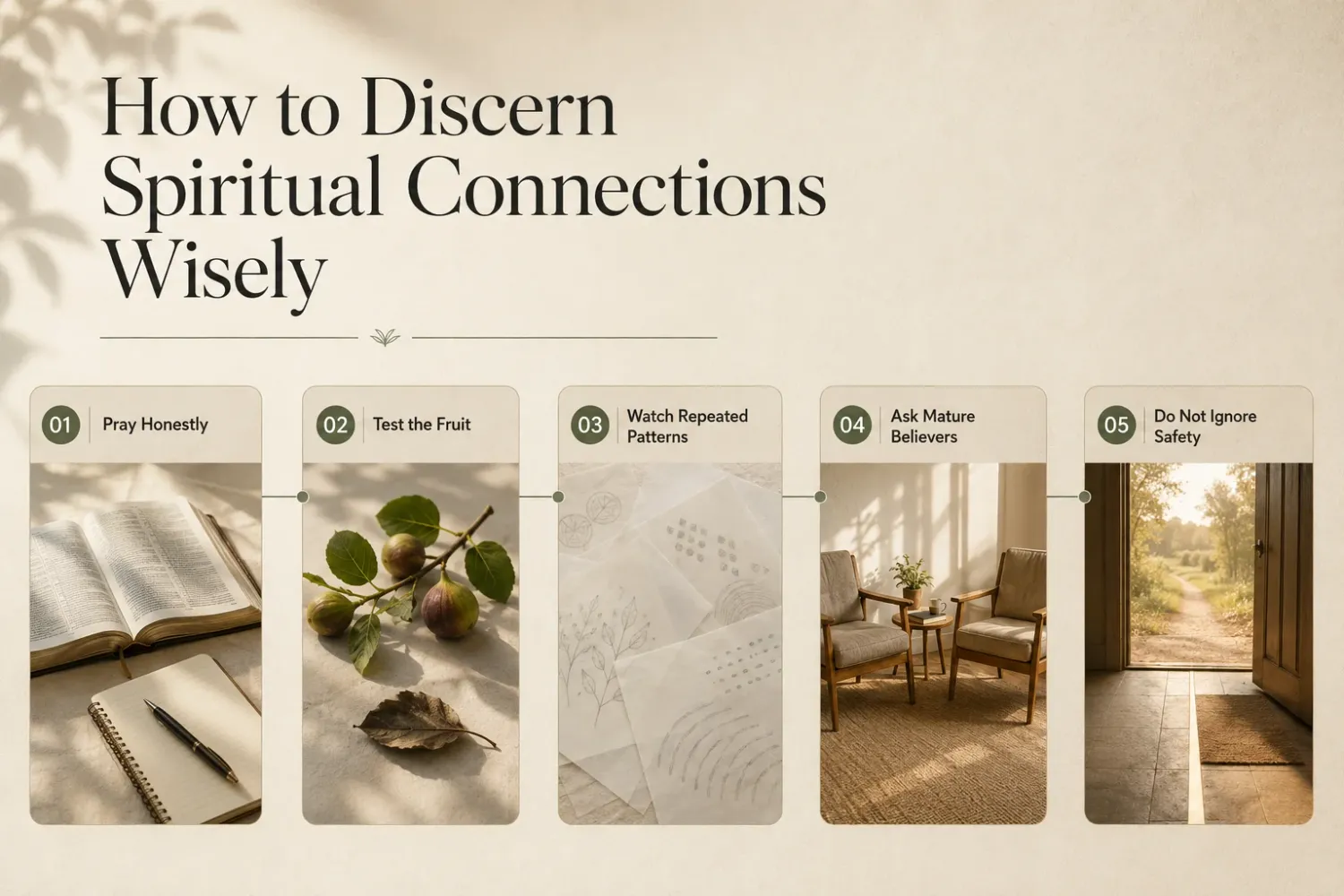
Discerning spiritual connections requires patience. Emotional intensity can feel like confirmation, but intensity alone is not discernment. Attraction, chemistry, dreams, prophetic words, and strong feelings must all be tested.
God is not afraid of your honest questions. He can lead you through Scripture, peace, counsel, conviction, and truth.
Pray Honestly
Begin with honest prayer. Do not pray only for the relationship to work. Pray for truth.
You can ask:
“Lord, show me what is from You, what is from my flesh, what is from fear, and what is spiritually harmful. Give me courage to obey You.”
Honest prayer makes room for surrender. You may want God to confirm the relationship, but discernment means letting Him correct you too.
Test the Fruit
Fruit is more reliable than intensity. Ask what the relationship is producing over time.
Are you growing in love for Jesus, humility, purity, truth, patience, self-control, and peace? Or are you growing in secrecy, anxiety, compromise, fear, shame, lust, isolation, and confusion?
Good fruit does not mean there are no hard conversations. It means the relationship is moving toward light, repentance, and Christlike love.
Watch Repeated Patterns
One moment can be misunderstood. Repeated patterns reveal more.
Watch what happens after conflict. Watch how your partner responds to correction. Watch whether apologies lead to change. Watch whether boundaries are respected. Watch whether spiritual concerns are mocked, minimized, or manipulated.
Patterns are often clearer than promises.
Ask Mature Believers
Invite wise, mature believers into the process. Choose people who love Jesus, know Scripture, care about your safety, and are not easily impressed by charm or emotion.
Do not only ask people who will agree with you. Ask people who can tell you the truth with grace.
If you are afraid to tell the full story, that is already information. Hidden details often reveal the area where discernment is most needed.
Do Not Ignore Safety
Spiritual discernment never requires you to ignore danger. If you are afraid of your partner, being threatened, being followed, being sexually pressured, being financially controlled, or being isolated from support, treat that as a safety issue.
Do not confront an abusive person alone if doing so could place you at risk. Do not announce plans to leave if that could escalate danger. Seek help from trusted people and qualified support.
What to Do if the Relationship Feels Ungodly
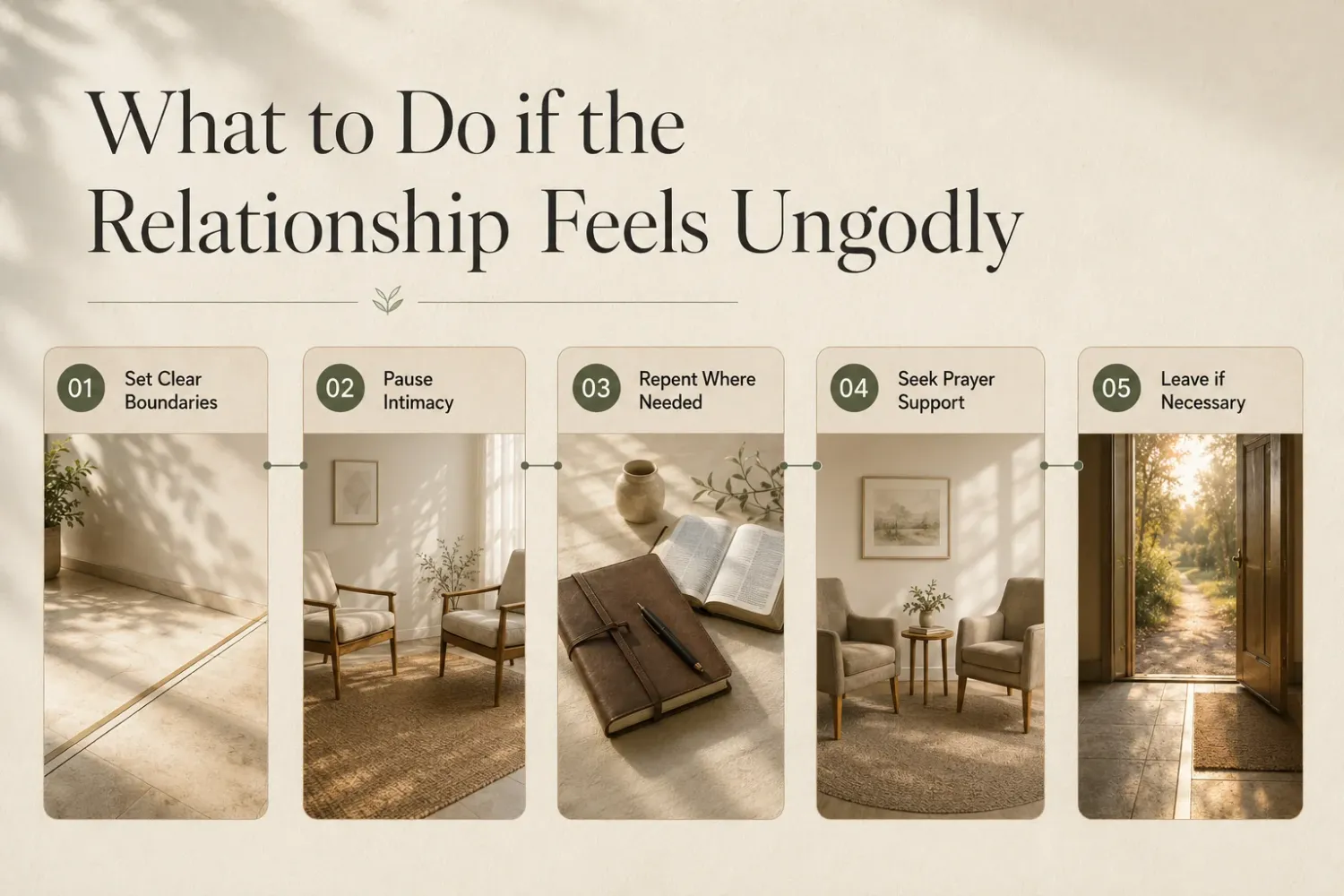
If the relationship feels ungodly, do not panic. Slow down and respond in obedience. The next step may be repentance, boundaries, prayer, counseling, deliverance support, a pause, or leaving safely.
The right response depends on the fruit, the level of danger, and what the Lord is making clear.
Set Clear Boundaries
Boundaries are not punishment. They are a way to protect obedience, truth, and peace.
A boundary may sound like: “I will not continue sexual compromise.” “I will not hide this relationship from wise counsel.” “I will not allow threats, insults, or spiritual manipulation.” “I need space to pray and seek counsel.”
A healthy person may feel disappointed by a boundary, but they will not punish you for having one.
Pause Intimacy
If intimacy has clouded discernment, pause it. Sexual connection can deepen emotional attachment and make it harder to see clearly.
Pausing intimacy is not about shame. It is about returning the relationship to truth. If the relationship cannot survive obedience, that is important to know.
Repent Where Needed
Sometimes the issue is not only the other person. You may need to repent for compromise, idolatry, people pleasing, lust, control, dishonesty, bitterness, or ignoring conviction.
Repentance restores clarity. It brings your heart back under the Lordship of Jesus.
If fear of rejection or approval has kept you trapped, AIIIH’s teaching on the spirit of people pleasing may help you recognize the deeper pattern.
Seek Prayer Support
If the relationship has left you spiritually confused, fearful, oppressed, or deeply bound, seek prayer support. Deliverance prayer can help when there has been spiritual heaviness, ungodly attachment, torment, or recurring oppression after a toxic relationship.
Deliverance is not a shortcut around wisdom. It should not replace repentance, boundaries, counseling, safety planning, or discipleship. But prayer can help bring spiritual freedom where the enemy has used a relationship to create bondage.
AIIIH offers one-on-one Deliverance sessions for people seeking prayer, freedom, and spiritual clarity.
Leave if Necessary
Sometimes the faithful step is leaving. If the relationship is leading you into sin, harming your relationship with Jesus, refusing truth, rejecting boundaries, or placing you in danger, staying may not be wisdom.
Leaving does not mean you failed. It may mean you finally obeyed.
If you are married, seek mature pastoral counsel and safe support before making major decisions, especially where abuse, adultery, abandonment, or serious spiritual harm is present. If there is danger, safety comes first.
Move Forward With Spiritual Discernment and Peace
Spiritual discernment in relationships is not about living afraid of people. It is about walking closely with Jesus so you can recognize what is holy, what is unhealthy, and what is harmful.
Do not rush to call every conflict demonic. Do not ignore repeated spiritual warning signs either. Hold both truths together. Some relationships need patience and maturity. Some need repentance and repair. Some need firm boundaries. Some need to end.
If a relationship has left you spiritually confused, fearful, or oppressed, you do not have to discern it alone. AIIIH offers prayer and deliverance support to help you seek Jesus, regain clarity, and move forward in freedom. You can also explore AIIIH’s mission and ministry heart or read more spiritual warfare and deliverance teachings.
If you are experiencing spiritual heaviness, oppression, or bondage connected to a relationship, we welcome you to our one-on-one Deliverance sessions, available daily.
FAQs
Can a partner attract demons into my life?
A partner can influence your spiritual life, but they cannot overpower Christ in you. Spiritual vulnerability may increase when a relationship normalizes sin, occult involvement, manipulation, addiction, sexual compromise, or rebellion. The right response is not fear. Test the fruit, repent where needed, set boundaries, and seek prayer support if there is oppression.
How do I know if a relationship is a spiritual attack?
A relationship may involve spiritual attack if it repeatedly pulls you away from Jesus, produces confusion after spiritual growth, pressures you into sin, or isolates you from wise counsel. Still, not every hard relationship is spiritual warfare. Some issues are emotional, practical, immature, or abusive. Discernment looks at Scripture, fruit, repeated patterns, and counsel.
Should I break up if I feel spiritually uneasy?
You should not break up based only on one uneasy feeling, but you should not ignore a repeated lack of peace. Slow down, pray honestly, seek wise counsel, and look at the fruit. If the relationship involves coercion, abuse, threats, sexual pressure, or ongoing compromise, stronger action may be needed.
Can soul ties affect spiritual discernment?
Soul ties can affect spiritual discernment when emotional or sexual attachment makes it hard to see clearly. You may feel bound to someone even when the relationship is unhealthy. Prayer, repentance, boundaries, and support can help you break ungodly attachment and return to peace.
Should I get deliverance prayer after a toxic relationship?
Deliverance prayer may be helpful after a toxic relationship if you feel spiritually oppressed, tormented, bound by ungodly attachment, or unable to move forward after repentance and boundaries. Deliverance should work alongside wisdom, healing, safety, and discipleship. It should not replace practical help when abuse or danger is present.
SUPPORT THIS MINISTRY
As a Catholic nonprofit, every dollar given is prayerfully used to build the Kingdom of God — on earth as it is in heaven. Through your generosity, we are able to continue proclaiming the Gospel, setting the captives free, and equipping the Body of Christ to walk in healing, deliverance, and true freedom. Your gift is not just a donation; it is an act of faith that multiplies into souls restored, families healed, and lives transformed by the power of Jesus Christ. We keep nothing for ourselves. All contributions go directly toward sustaining this ministry — providing the tools, technology, staff, and outreach necessary to reach more hearts with the mercy of God. Please prayerfully consider sowing into this mission. Together, we are answering Christ’s call to heal the brokenhearted, proclaim liberty to captives, and set free those who are oppressed.