
Lust Spirits: Signs, Roots, and the Path to Freedom

Written by: Christopher Gomez
Table of Contents
Lust spirits are often misunderstood. Many people only connect them with open sexual sin, pornography, or promiscuity. Those patterns can be part of it, but the deeper issue is often a wounded heart searching for protection, worth, relief, or control in a place God never designed to carry that weight.
Part of our Strongman Demons teaching series, drawn from themes in my upcoming book, Where Are All the Saints, this teaching looks at lust not only as a behavior, but as a spiritual pattern that can hide behind shame, fear, false confidence, and even extreme repression. The goal is not to condemn people who struggle. The goal is to bring light to the pattern so Jesus can heal the wound beneath it.
A lust spirit does not only push a person toward sexual excess. It can also twist sexuality into fear, disgust, isolation, or rejection of healthy intimacy. In both directions, the enemy works to distort God’s design for love, purity, marriage, identity, and connection.
Key Takeaways
Lust spirits often attach to wounds of low worth, shame, rejection, or fear.
Lust can appear as promiscuity or as extreme sexual repression.
The deeper issue is not only behavior, but the false protection the pattern provides.
Freedom comes through truth, repentance, healing, and restored identity in Christ.
What Are Lust Spirits?
Lust spirits are demonic influences that distort a person’s relationship with desire, intimacy, and identity. They do not simply tempt a person toward sexual sin. They work to reshape how a person sees their body, their worth, their relationships, and their need for love.
In many cases, lust becomes a counterfeit covering for inner pain. A person may feel unwanted, unseen, rejected, or deeply inadequate. Instead of bringing that wound to God, the person may learn to quiet the pain through sexual attention, fantasy, conquest, avoidance, or control.
The pattern can look confident from the outside. Someone may seem sexually bold, desirable, or in control. Inside, there may be shame, emptiness, fear, and a constant need to prove value. Lust promises relief, but it never heals the wound.
Lust Is More Than Sexual Temptation
Sexual temptation is real, and every Christian must learn to resist it with humility and discipline. But a lust spirit goes deeper than a passing temptation. It creates a repeated pattern that feels hard to break, even when the person knows the behavior is harming them.
The person may feel driven, not just tempted. They may feel pulled into cycles of secrecy, fantasy, seduction, avoidance, or self-hatred. Afterward, guilt may rise, but the same wound remains untouched. The person then returns to the same pattern for relief.
That cycle is part of the deception. Lust offers a moment of escape, then leaves the person more bound to shame.
Lust Can Hide Behind Shame or False Confidence
Some people with lust spirits do not appear broken. They may use sexual attention to feel powerful, wanted, admired, or safe. The praise of others becomes a substitute for the love of God and the security of true identity.
Others carry the same wound in a quieter way. They may feel disgust toward their own sexuality. They may fear intimacy, avoid relationships, or believe that vulnerability itself is sinful. The outside behavior looks different, but the root can still be bondage.
The enemy is not creative in a holy way. He distorts what God made good. Whether through excess or fear, the aim is to disconnect a person from love, peace, purity, and healthy intimacy.
How Lust Spirits Work in a Person’s Life
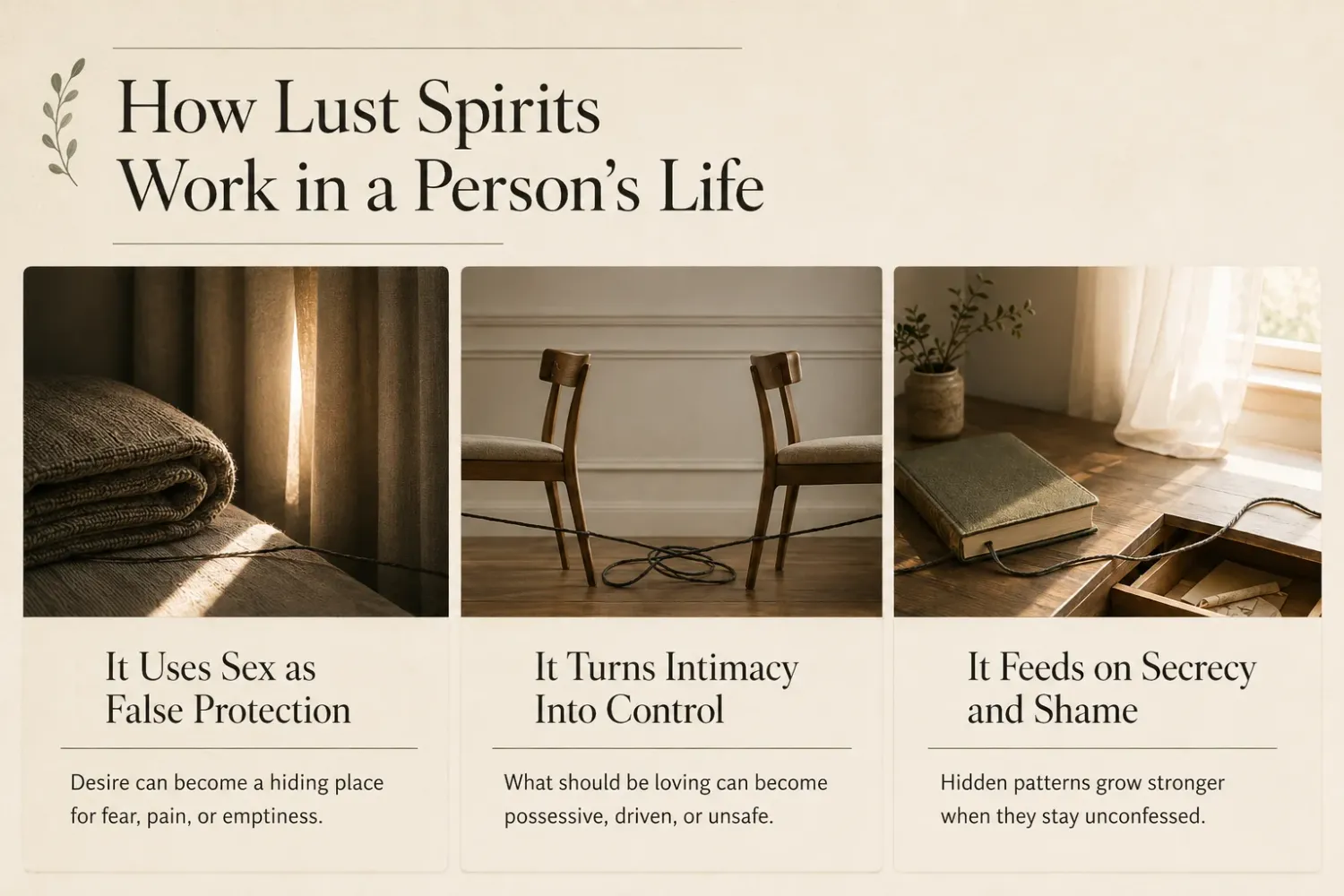
A lust spirit often works by turning pain into appetite. The person is not only chasing pleasure. They are trying to silence something deeper.
For some, sexual attention becomes proof that they are not worthless. For others, rejecting intimacy becomes a way to stay safe. Both patterns can become spiritual hiding places. The person may not realize they are protecting a wound instead of bringing it to Jesus.
The spirit uses lies. It whispers that the person is only valuable if someone wants them. It may whisper that intimacy is dangerous, dirty, or shameful. It may convince someone that purity means fear instead of holiness. Over time, the lie feels normal.
It Uses Sex as False Protection
Lust can become a shield. A wounded person may use sex, attention, fantasy, or seduction to avoid facing rejection, loneliness, or shame. For a moment, they feel chosen. For a moment, they feel powerful. For a moment, the inner accusation gets quiet.
But false protection always demands payment. The person may lose peace, trust, self-respect, or the ability to form healthy bonds. The wound becomes deeper because the behavior never touches the real need.
God does not heal us by shaming us into hiding. He heals by bringing truth into the exact place where the lie first took root.
It Turns Intimacy Into Control
Lust also turns intimacy into control. Instead of love becoming a place of honor and covenant, it becomes a way to manage fear. A person may control others through attraction, withdrawal, performance, or rejection.
Some people use sexual availability to keep someone close. Others use sexual distance to keep someone from getting too close. Both can be rooted in fear rather than love.
In marriage, this becomes especially painful. God designed marital intimacy to strengthen love and covenant. When lust, shame, or fear twists that gift, the marriage can become marked by rejection, confusion, frustration, and emotional distance.
It Feeds on Secrecy and Shame
Lust grows stronger in secrecy. Shame tells the person, “You are the only one. You are too dirty. You cannot bring this into the light.” That lie keeps the person isolated and more vulnerable.
Secrecy also prevents wise support. A person may pray sincerely, yet never allow trusted spiritual help, pastoral care, accountability, or inner healing to reach the wound. The enemy wants the person to fight alone because isolation makes bondage feel permanent.
The moment truth comes into the light, the power of shame begins to weaken.
Signs of Lust Spirits
The signs of lust spirits are not always dramatic. Some are obvious, but others appear in emotional patterns, relationship struggles, or distorted beliefs about intimacy.
A person should be careful not to call every temptation a demon. Christians still deal with the flesh, habits, immaturity, trauma, and poor choices. Discernment matters. Still, repeated patterns that feel compulsive, shame-filled, and resistant to normal correction may need deeper spiritual attention.
Common signs can include:
Repeated sexual sin followed by deep shame but little lasting change
Using sexual attention to feel valuable, wanted, or powerful
Strong fear of intimacy, vulnerability, dating, or marriage
Viewing sex as dirty, unsafe, or sinful even within godly marriage
Feeling driven by fantasy, pornography, seduction, or conquest
Avoiding healthy relationships because closeness feels threatening
Feeling disgust toward the body or sexuality in a way that blocks love
Repeated cycles of guilt, secrecy, repentance, and relapse
These signs do not prove everything by themselves. They are invitations to slow down and ask what is happening beneath the surface. God cares about both the behavior and the wound that keeps feeding it.
Real-Life Patterns Lust Spirits Can Create
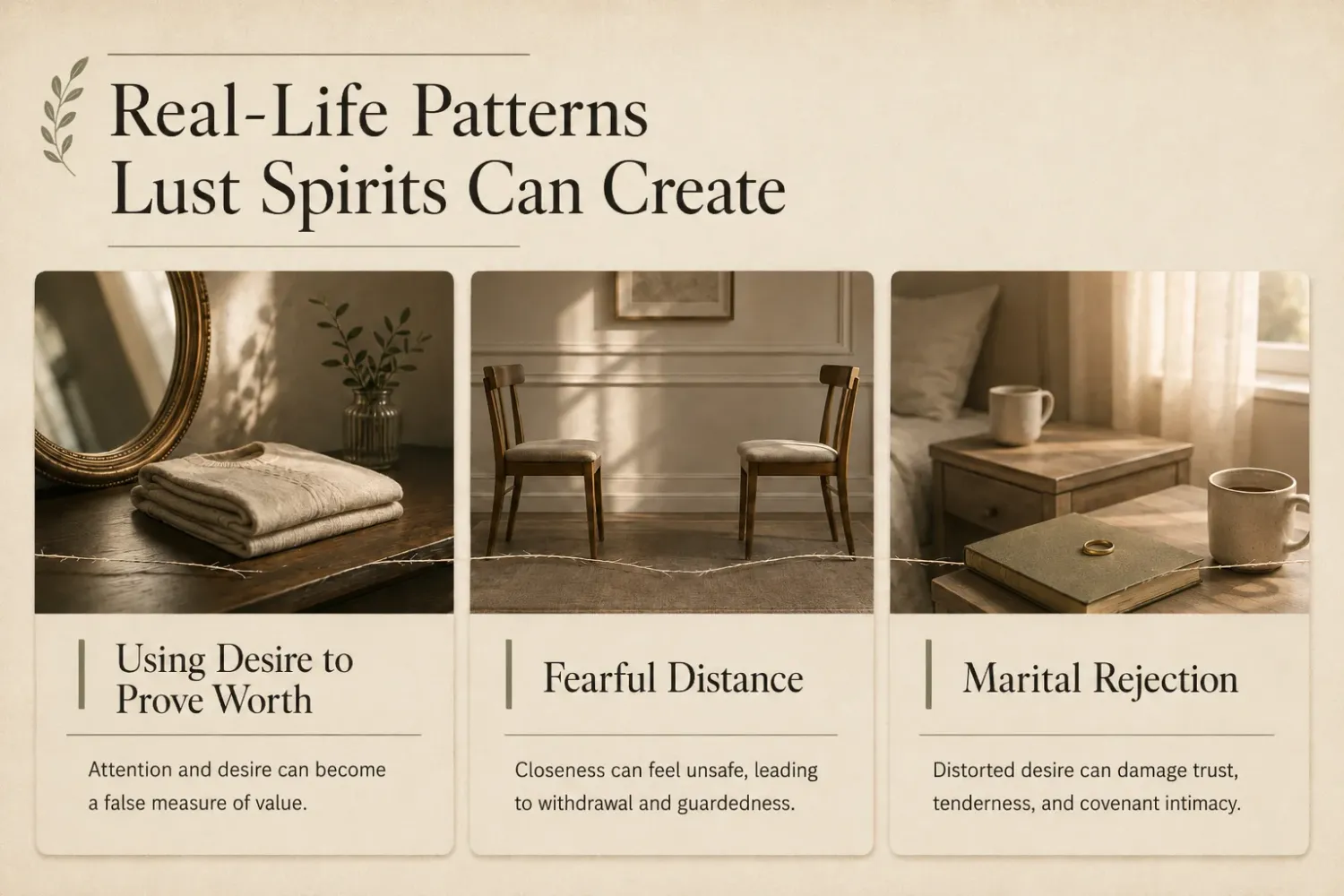
Lust spirits rarely stay limited to one private habit. Over time, they shape how a person relates to themselves, to others, and to God.
One person may move from relationship to relationship, always needing validation but never feeling secure. Another may avoid relationships entirely, calling it wisdom while secretly fearing closeness. Another may enter marriage but struggle to receive or give affection without guilt.
These patterns can be painful because they affect trust. They can create confusion in friendships, dating, marriage, and ministry. The person may love God sincerely and still feel trapped in a pattern they cannot explain.
Using Desire to Prove Worth
A person wounded by rejection may begin to measure worth by desirability. If someone wants them, they feel valuable. If someone ignores them, they feel worthless. That unstable foundation can lead to constant comparison, jealousy, attention-seeking, or emotional collapse.
Lust then becomes a false mirror. It tells the person who they are based on who wants them. But identity built on human desire will always be fragile.
God does not define worth by sexual attention. He defines worth through creation, redemption, love, and sonship or daughterhood in Christ.
Fearful Distance
Some people respond to woundedness by shutting down desire. They may avoid affection, resist closeness, or distrust anyone who expresses interest. They may feel safer alone because intimacy feels like exposure.
Fearful distance can look disciplined, but it may be rooted in shame. The person may not be walking in peace. They may be living under a lie that says love will harm them, expose them, or lead them into sin.
Godly boundaries protect love. Fearful walls prevent love.
Marital Rejection
In marriage, lust spirits can create painful confusion. One spouse may reject physical intimacy because it feels shameful, dirty, or unsafe. Another may feel unwanted and emotionally abandoned. Over time, both may carry wounds that are hard to talk about.
The enemy uses that silence. He turns a sacred bond into a place of accusation. The rejected spouse may feel unloved. The fearful spouse may feel guilty and pressured. Without truth and healing, distance grows.
God does not want marriage ruled by fear, pressure, shame, or resentment. He wants covenant love restored with honor, patience, tenderness, and truth.
Spiritual Roots Behind Lust Spirits
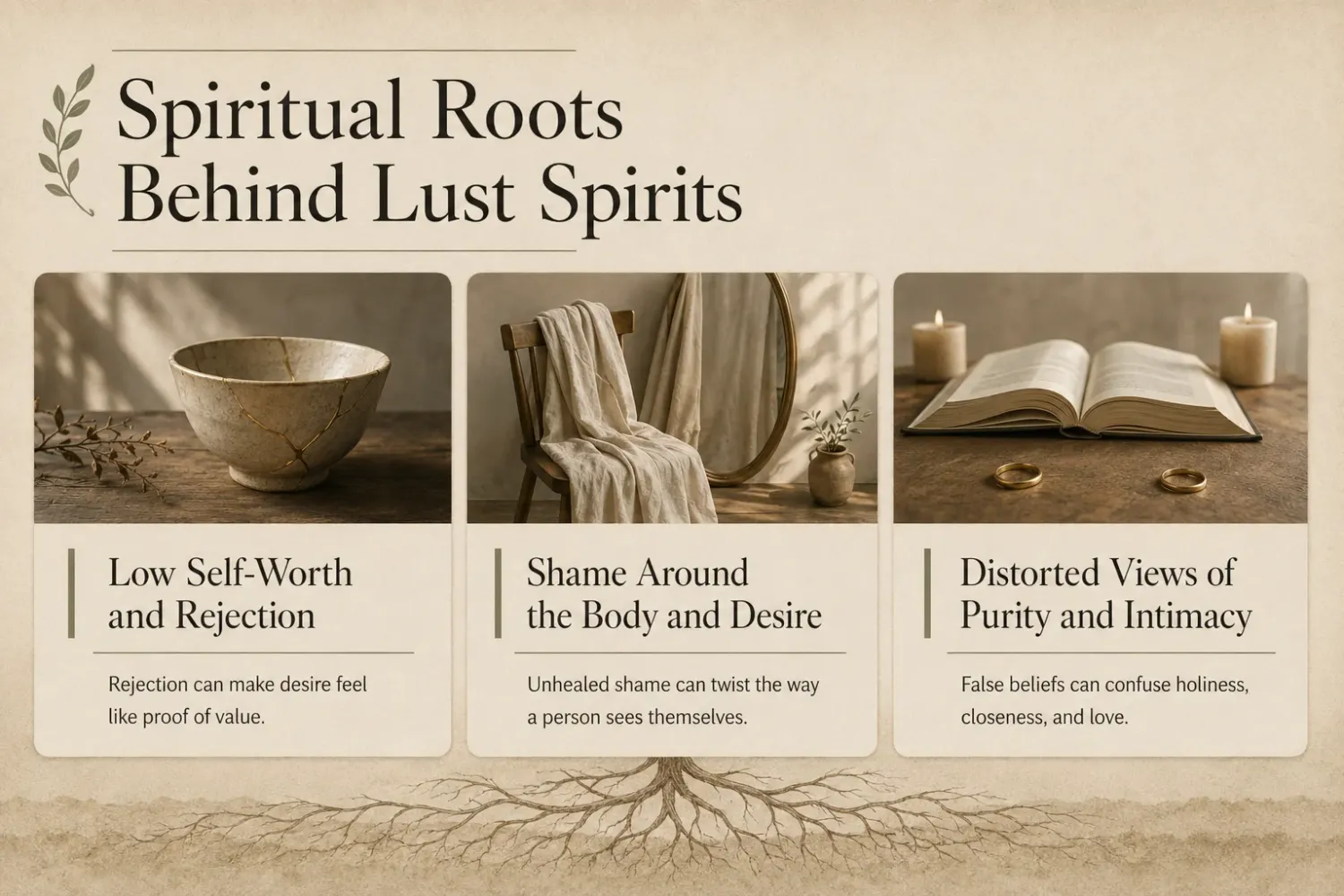
The spiritual roots behind lust spirits often include wounds of identity. Lust attaches easily where a person has believed lies about worth, love, safety, or the body.
Some roots come through personal sin. Others may be connected to trauma, rejection, abandonment, abuse, exposure to pornography, unhealthy family patterns, or distorted teaching about sexuality. The door may be obvious, or it may require prayerful discernment.
The focus should not be obsession with the demon. The focus should be freedom in Christ. When the root is brought into the light, the lie loses authority.
Low Self-Worth and Rejection
Low self-worth is one of the strongest roots connected to lust spirits. When a person feels unwanted, they may try to manufacture worth through sexual attention or complete emotional control.
Rejection teaches the heart to search for proof. Lust offers quick proof, but it is counterfeit. It says, “You are wanted because someone desires you.” God says, “You are loved because you are Mine.”
Those two voices lead to very different lives. One produces striving. The other produces peace.
Shame Around the Body and Desire
Shame can attach to the body in powerful ways. A person may feel dirty for having desire, ashamed of their body, or afraid of being known. That shame may come from sin, abuse, harsh teaching, humiliation, or repeated rejection.
The enemy uses shame to keep people hidden from God, even though God already sees them fully. Shame says, “Hide until you are clean.” Jesus says, “Come to Me, and I will make you clean.”
Freedom requires more than controlling behavior. The heart must learn to receive truth where shame has been speaking.
Distorted Views of Purity and Intimacy
Purity is holy. Fear is not the same as purity. A person can avoid sexual sin and still be bound by a distorted view of intimacy.
When purity becomes fear, people may despise their bodies, avoid healthy relationships, or reject marital intimacy. When intimacy becomes lust, people may use others instead of loving them. Both distortions need correction.
God’s design is not indulgence and not repression. His design is love ordered by truth, covenant, honor, and holiness.
How to Break the Pattern of Lust Spirits
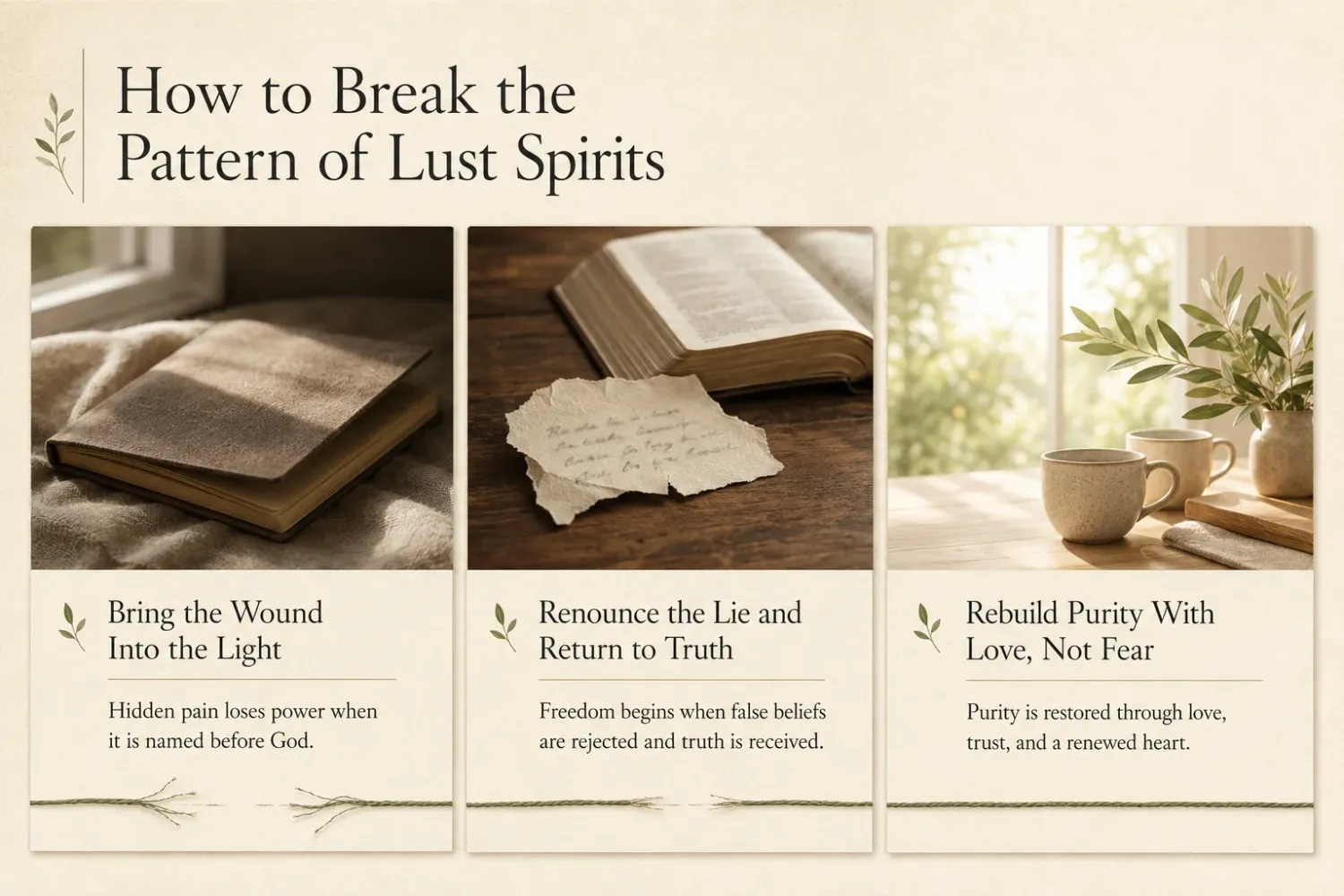
Breaking the pattern begins with honesty. A person must be willing to stop defending the behavior, stop hiding in shame, and stop calling fear holiness when it is not holiness.
Freedom is not found by pretending the struggle is small. It is also not found by becoming obsessed with the darkness. Freedom comes by bringing the full pattern to Jesus and allowing Him to address the root.
For many people, the first step is naming the lie. “I need this to feel loved.” “No one will want me unless I perform.” “Intimacy is always dangerous.” “My desire makes me dirty.” Once the lie is named, it can be renounced and replaced with truth.
Bring the Wound Into the Light
A lust pattern often survives because the wound beneath it stays hidden. The person may confess behavior without ever touching the deeper pain. They may say, “I sinned again,” but never say, “I feel worthless unless someone wants me.”
God wants the deeper conversation. He is not only interested in stopping outward actions. He wants to heal the place that keeps asking lust to comfort it.
Trusted spiritual support can be important here. Confession, prayer, pastoral care, wise accountability, and inner healing can help a person stop fighting alone.
Renounce the Lie and Return to Truth
A lust spirit gains influence through agreement. The agreement may sound like, “I am only valuable when desired,” or “My sexuality is disgusting,” or “I cannot be free.” Those agreements must be broken.
Renouncing a lie is not a performance. It is a sincere turning of the heart. The person rejects the false covering and returns to what God says.
A simple prayer may sound like this: “Jesus, I renounce the lie that lust can protect me, prove my worth, or define my identity. I bring You the wound beneath this pattern. Teach me to receive Your love and walk in purity without shame.”
Rebuild Purity With Love, Not Fear
Purity must be rebuilt on love. Fear can control behavior for a season, but it cannot produce wholeness. Shame may suppress desire, but it cannot heal desire.
Healthy purity honors God, the body, marriage, and other people. It does not use others for comfort. It does not reject God’s design out of fear. It learns self-control while also receiving healing.
For unmarried people, purity includes patience, boundaries, wisdom, and a restored view of identity. For married people, purity includes honor, tenderness, faithfulness, and the healing of whatever has made intimacy feel unsafe or unclean.
Freedom From Lust Spirits Starts With Truth
Lust spirits distort what God made good. They can turn desire into a place of bondage, or they can turn intimacy into something feared and rejected. In both cases, the deeper wound needs the love and authority of Jesus.
Freedom begins when the person stops treating lust as a protector. Lust cannot heal rejection. Lust cannot give identity. Lust cannot restore innocence. Lust cannot make someone whole. Only Christ can enter the wound, silence the lie, and restore what has been broken.
If you recognize these patterns in your life, do not respond with panic or self-hatred. Bring the pattern into the light. Ask the Holy Spirit to reveal the root. Seek prayer, wise support, and the healing Jesus freely gives. If you are experiencing the effects of this spirit in your life, we welcome you to our one-on-one Deliverance sessions, available daily, and our monthly healing call, held on the first Tuesday of every month.
FAQs
Can lust spirits affect someone who is trying to live a pure life?
Yes, lust spirits can affect someone who sincerely wants purity. The issue is not always open rebellion. Sometimes the deeper pattern is shame, fear, secrecy, or a wounded sense of worth that keeps pulling the person into cycles they hate.
Can a lust spirit show up as fear of intimacy?
A lust spirit can show up as fear of intimacy when sexuality has become tied to shame, danger, or control. That fear may look like holiness from the outside, but the fruit is often isolation, rejection, or emotional distance.
Is every sexual temptation caused by a lust spirit?
Not every sexual temptation is caused by a lust spirit. Christians also face the flesh, habits, immaturity, and normal temptation. A repeated pattern marked by compulsion, shame, secrecy, and deep resistance to truth may need stronger spiritual discernment.
Can marriage be affected by lust spirits?
Marriage can be affected by lust spirits when intimacy becomes controlled by shame, fear, rejection, or selfish desire. God designed marital intimacy to strengthen covenant love, not to become a place of pressure, avoidance, or accusation.
How do I know if the root is spiritual or emotional?
The root may be spiritual, emotional, or both. A wise path looks at the fruit, the repeated pattern, the wound underneath, and the lies the person has believed. Prayer, discernment, counsel, and trusted spiritual support can help bring clarity.
Can prayer alone break a lust pattern?
Prayer is essential, but many lust patterns also require repentance, honesty, accountability, inner healing, and changed behavior. God often brings freedom through both direct spiritual breakthrough and a practical process of healing.
SUPPORT THIS MINISTRY
As a Catholic nonprofit, every dollar given is prayerfully used to build the Kingdom of God — on earth as it is in heaven. Through your generosity, we are able to continue proclaiming the Gospel, setting the captives free, and equipping the Body of Christ to walk in healing, deliverance, and true freedom. Your gift is not just a donation; it is an act of faith that multiplies into souls restored, families healed, and lives transformed by the power of Jesus Christ. We keep nothing for ourselves. All contributions go directly toward sustaining this ministry — providing the tools, technology, staff, and outreach necessary to reach more hearts with the mercy of God. Please prayerfully consider sowing into this mission. Together, we are answering Christ’s call to heal the brokenhearted, proclaim liberty to captives, and set free those who are oppressed.